
Last updated November 24, 2026
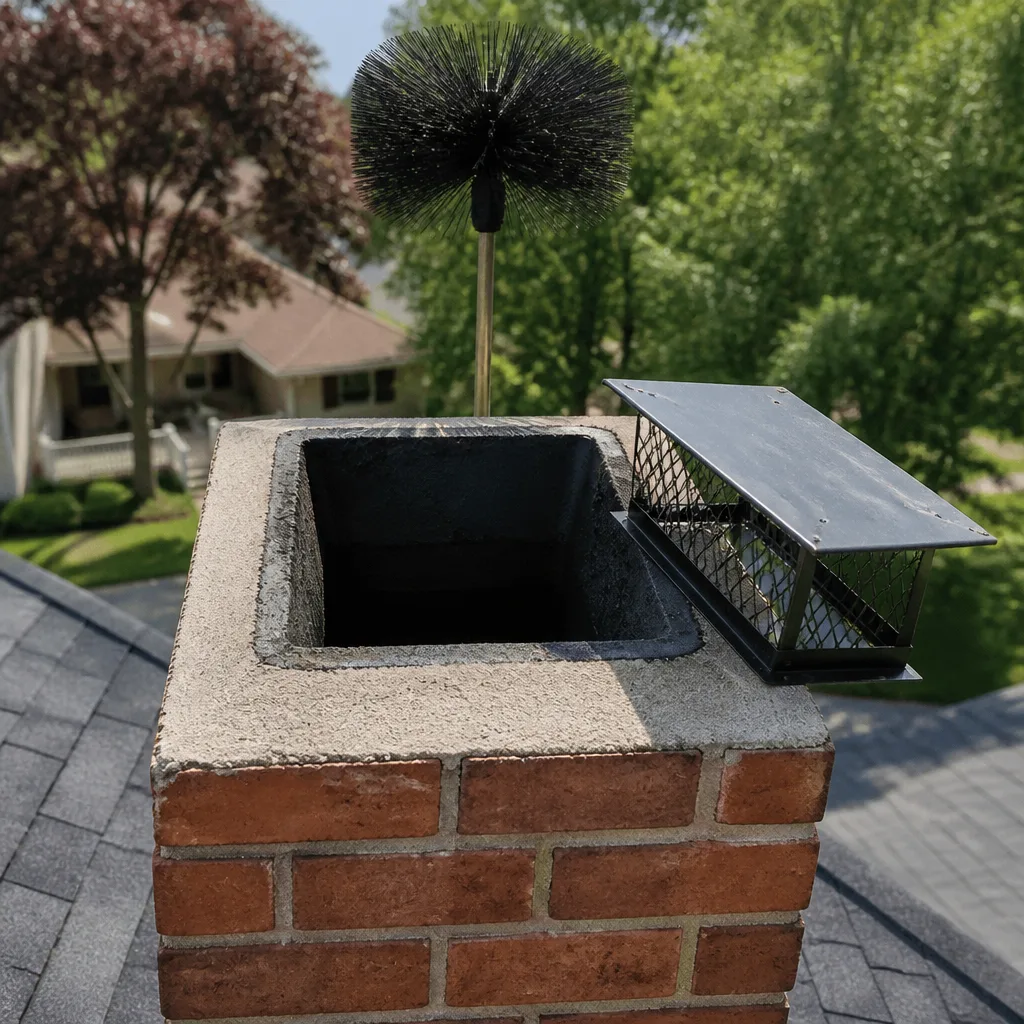 Sweep & inspection
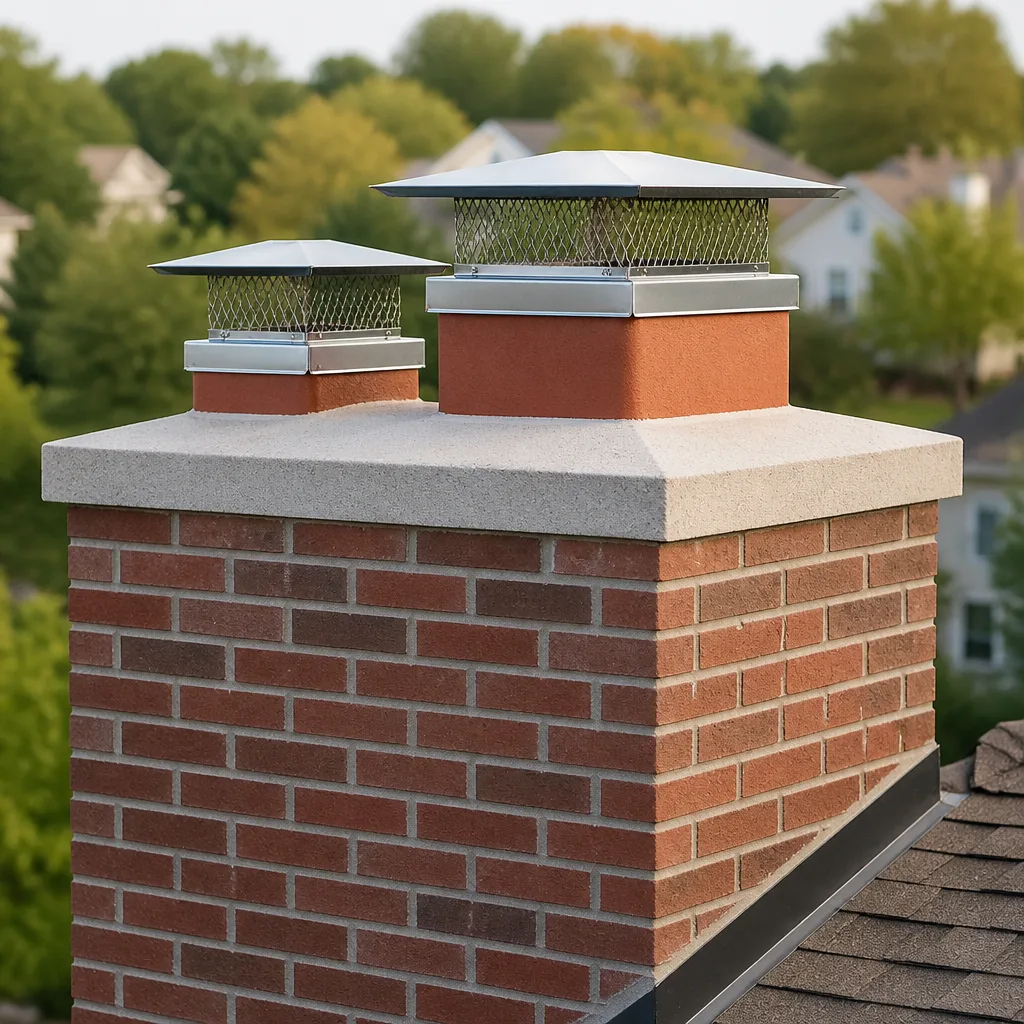 Caps & crowns
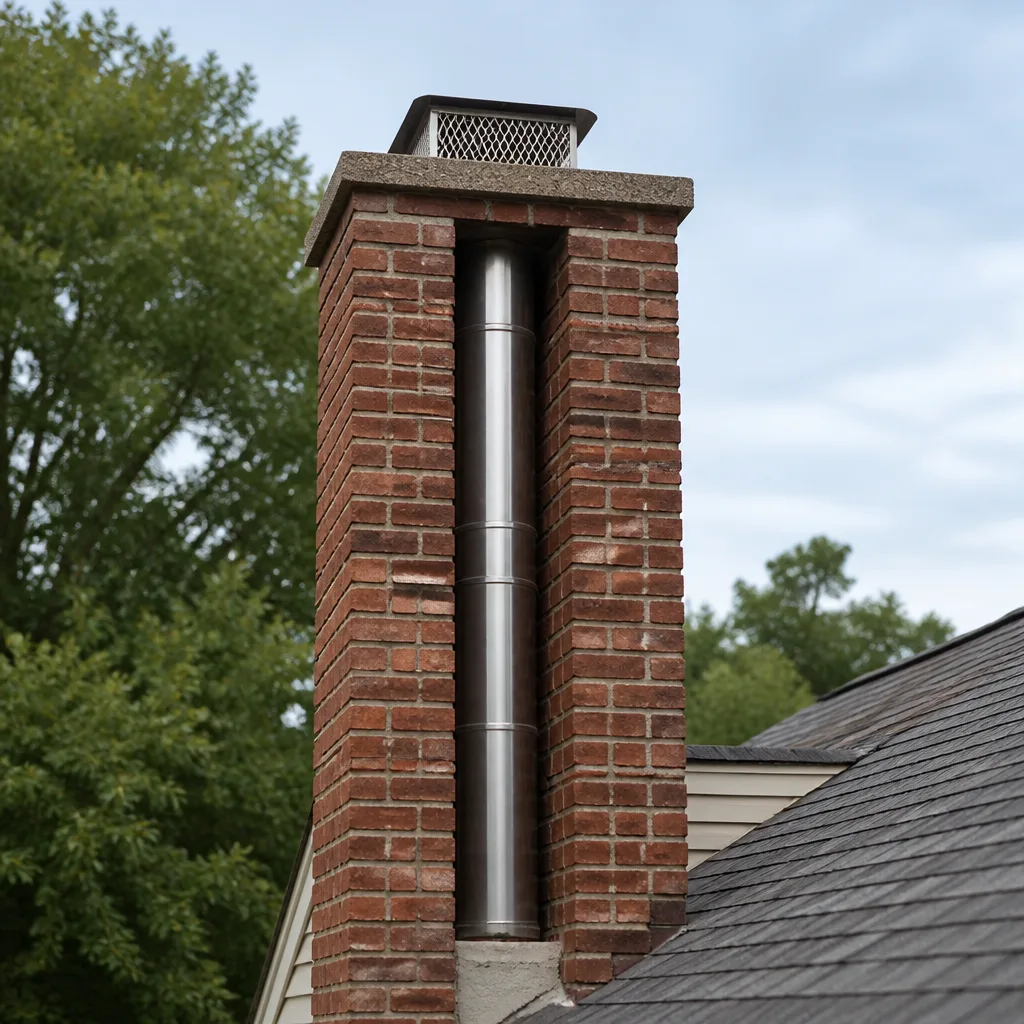 Flue relining
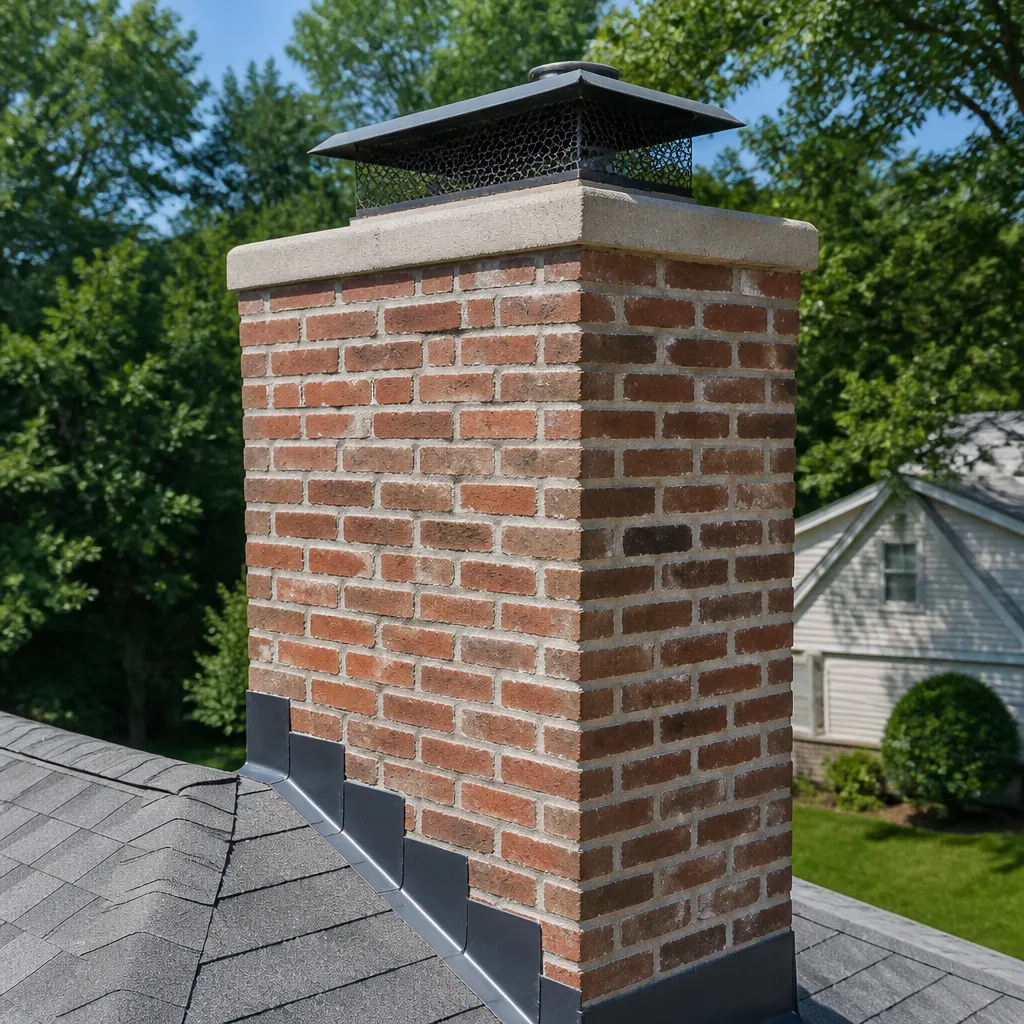 Masonry repair
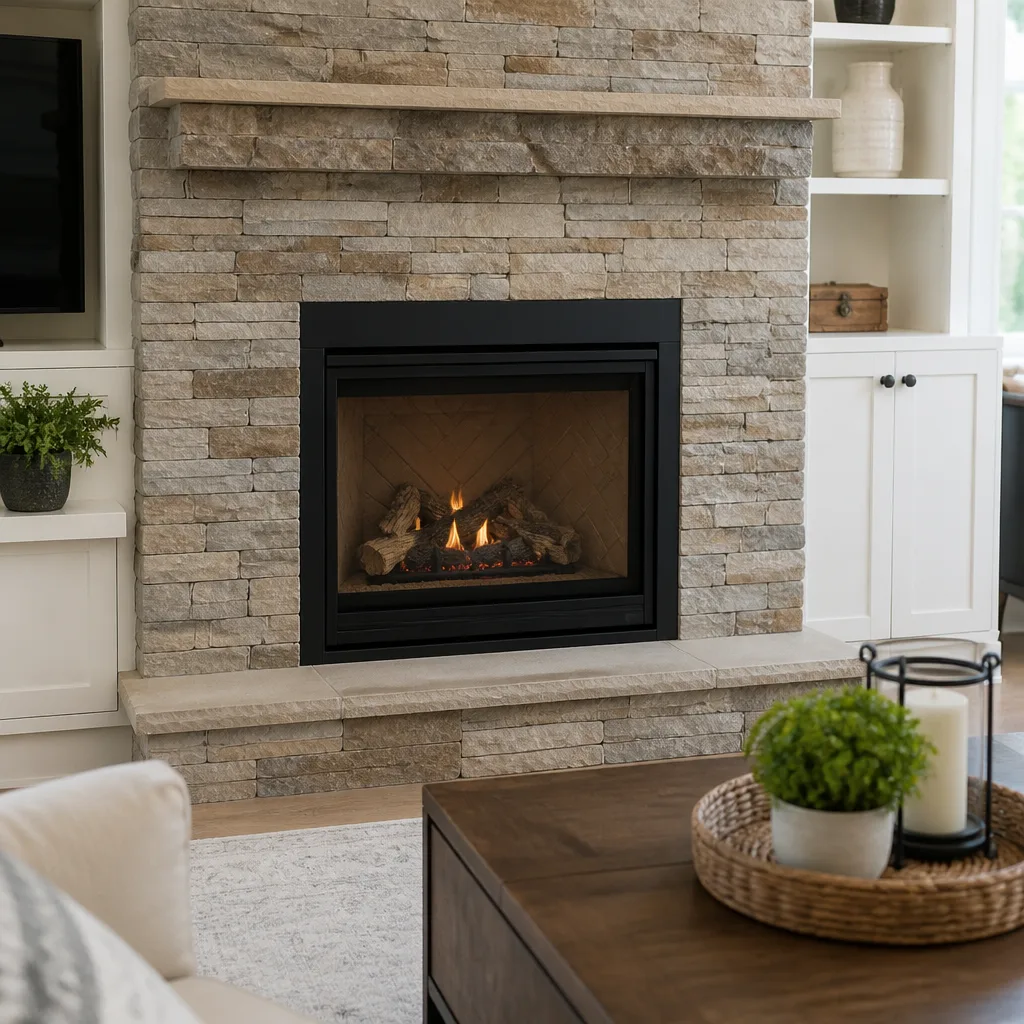 Gas fireplace service
Level 1 sweep and inspection to the NFPA 211 annual standard - flue, crown, cap, and flashing checked and photographed
Chimney sweep logs do not sweep chimneys. They loosen some creosote - which then falls where a brush and vacuum still have to collect it.
Chimney Sweep Troubleshooting in Federal Way: Common Problems and How to Fix Them
If smoke rolls back into your living room only on windy days but not calm ones, you don’t have a creosote problem. You have a draft pressure problem, and no amount of sweeping will fix it. That distinction matters more than most homeowners realize. Here in Federal Way, where the rain comes sideways for months and the temperatures rarely drop hard enough to freeze a chimney dry, the failures we troubleshoot most often aren’t the ones people expect. They’re the slow, quiet ones. This guide teaches you to read your chimney’s behavior the way a technician does: matching each symptom to the system behind it, so you know what you’re actually dealing with before anyone touches a brush.
Quick Answer
Most chimney problems in Federal Way trace back to four things: draft pressure failures (smoke that appears only on windy days), moisture damage from our wet, mild climate (spalling mortar and rusted dampers), creosote buildup from slow-burning fires, and blockage from nests or debris. Sweeping solves buildup and blockage. Draft issues need a cap, height, or pressure fix. Moisture damage needs repair with trade-grade materials. Diagnosis comes before treatment, always.
Styles & brands we work with
- Sweep & inspection
- Caps & crowns
- Flue relining
- Masonry repair
- Gas fireplace service
Table of Contents
- How to tell a draft failure from a blockage
- What Federal Way’s climate does to your chimney
- Smoke smell in summer vs. smoke smell while burning
- Flashlight inspection vs. camera inspection
- Symptom-to-cause reference chart
- Creosote: the quiet problem behind slow fires
- Caps and crowns: weatherproofing that lasts
- When to repair and when to leave it alone
How Do You Tell a Draft Failure From a Blockage?
Draft failures and blockages produce similar symptoms, but their clues are completely different. A blockage makes a fire burn poorly every single time. A draft failure makes a fire burn fine under some conditions and terrible under others. Learn to read that difference and you’ll skip the appointment you don’t need and book the one you do.
Here’s the pattern breakdown:
- Smoke appears only on windy days: This is a pressure problem. Wind creates turbulence over the flue top or pushes air down the chimney. A cap or a height adjustment is usually the fix, not a sweep.
- Smoke appears only when other exhaust fans run: This is negative pressure in your home. Your kitchen exhaust, bathroom fan, or furnace is pulling more air out of the house than the chimney can draw in. The fix is often air supply, not chimney work.
- Smoke appears every time, regardless of weather: This points toward blockage or heavy buildup. Something is in the flue restricting flow, or creosote has narrowed the passage.
- Smoke appears only on the first fire of the season: Common after months of disuse. Debris, leaves, or a nest from spring nesting season can sit in the flue over the summer and partially block it.
- Smoke appears only with a cold flue: Sometimes a chimney simply hasn’t warmed up enough to establish proper draft. If it clears once the fire heats the flue, you may have a marginal height issue rather than a true blockage.
A few physical clues also separate the two. If you see daylight through the chimney from the firebox, the flue is open, which suggests the blockage isn’t fully sealing it. If you hear birds or scratching, you have a nest. If you smell nothing and the fire simply won’t catch, you likely have poor draft or a wet chimney.
If the pattern points toward buildup or blockage, a routine chimney sweep will confirm it and clear it. If the pattern points toward pressure, sweeping won’t help. Time to look at the cap and the height of the termination.
What Does Federal Way’s Climate Do to Your Chimney That Other Climates Don’t?
Federal Way sits in a climate that is unusually hard on masonry and flue liners for reasons most homeowners don’t connect to their chimney at all. High annual rainfall, mild temperatures, and a long wet season mean moisture sits against your chimney for months without relief. Infrequent hard freezes mean you rarely get the drying cycle that a colder climate provides.
The result is a specific pattern of failure:
- Mortar joints soften before they crack. In cold climates, water freezes and the expansion splits the joint in one violent event. Here, the joint just stays wet. It softens, then erodes, then sand comes off in your hand when you touch it. By the time you notice, the joint is deeply recessed.
- Liner condensation runs inside the flue. When the flue is cold, warm moist exhaust condenses on the inside of the liner. That condensate mixes with creosote to form a corrosive, sticky residue that attacks the liner surface.
- Metal dampers and firebox components rust from the underside. The dampers often look fine from above and fail from below. A damper that sticks or won’t open fully is often rust, not misuse.
- Chimney caps fail at the mounting point. Water runs down the sides of the flue and into the attachment hardware. Caps that seemed solid a few seasons ago can loosen and shift.
- Crowns crack at the bond. The top of the chimney is the wettest part. A hairline crack in the crown lets water straight into the masonry below, which is why crown inspection matters more in Federal Way than in drier inland towns.
This is where materials matter. Repairing a Federal Way chimney with generic hardware-store mortar or an improvised cap accelerates the same failure. Trade-grade products from Gelco, Famco, and Copperfield are purpose-built for chimney weatherproofing, and HeatShield liner resurfacing is designed specifically for the kind of corrosive condensate environment this climate produces.
None of this is a reason to panic. It’s a reason to look at your chimney as a moisture system, not just a smoke passage. When we inspect a Federal Way chimney, we’re looking for moisture damage as much as buildup, because the moisture is what most often determines how long the chimney will last.
Smoke Smell in Summer vs. Smoke Smell While Burning: What’s the Difference?
Smoke smell in summer and smoke smell while burning are two different problems that require two different responses. The summer smell is passive. The burning smell is active. Mixing them up sends homeowners down the wrong diagnostic path.
Smoke Smell in Summer
A fireplace that smells smoky in July when nothing is burning has one of three causes, and all of them are about moisture or off-gassing rather than active draft:
- Moisture activating old creosote. Creosote left in the flue absorbs humidity from the summer air, then off-gasses that smoky smell back into the room. The wetter the season, the stronger the smell. This is a cleaning indicator, not a draft emergency.
- Stack effect reversal. On hot days, the air outside the chimney can be hotter than the air inside it. That reverses the natural flow and pushes flue air down into the house. The smell is being carried down, not generated fresh.
- Damper not sealing. A rusted or warped damper leaves a gap. Air moves both ways through that gap. If the smell is stronger near the firebox than the top of the room, check the damper first.
Smoke Smell While Burning
A smell when the fireplace is actively burning is a draft problem or a partial blockage. The combustion gases are not leaving cleanly, so they back up into the room. This is the case that needs immediate attention because carbon monoxide is one of those gases. If the smell is accompanied by a headache, drowsiness, or a stuffy feeling in the room, open a window, put the fire out, and don’t relight until the chimney has been inspected.
We handle fireplace repair for dampers and firebox issues alongside the sweep, so a summer smell and a stuck damper can be resolved in a single visit rather than two.
When Is a Flashlight Inspection Enough, and When Do You Need a Camera?
A flashlight inspection is enough to confirm obvious problems near the firebox, but only a camera can find the ones that actually cause most failures. The limit is line-of-sight: a flashlight shows you the firebox and the first few feet of flue. Past that, the flue bends, widens, or turns, and everything beyond that point is invisible.
Here’s when each approach fits:
A Flashlight Is Enough To:
- Confirm the damper opens and closes and check for rust or warping
- See heavy soot or creosote deposits near the top of the firebox
- Check for obvious debris at the smoke shelf
- Look for rust streaks on the firebox walls that suggest moisture
- Spot a firebox that’s cracked where you can see it
Only a Camera Inspection Can Show:
- Cracks in the flue liner several feet up, especially at joints
- Gaps in clay tile that a flashlight can’t reach
- Deteriorated mortar between flue tiles
- Blockages above the smoke shelf (nests, leaves, collapsed tile)
- Condensation damage on the upper flue surface
- The condition of the crown from the flue side
The practical rule we give Federal Way homeowners: if the fireplace has always worked and the only complaint is a lighter smell or slower start, a flashlight-level check is reasonable. If the fireplace has ever had a smoke rollback, has any visible staining, or hasn’t been inspected since the last owner lived there, a camera inspection is the only way to know what’s actually in the flue.
This is also the answer to the question we hear most often, which is some version of “do I really need all this?” The honest version is that a camera inspection either finds nothing (which means you don’t buy anything today) or it finds something specific you can see for yourself on the screen. Either outcome is better than a guess.
For a full diagnostic look at the chimney as a system, our chimney repair team uses a camera for exactly this reason. What the camera shows is what gets quoted.
Which Symptom Points to Which Cause? A Reference Chart
Use this chart to match what you’re seeing to what’s most likely happening. It’s not a diagnosis. It’s a starting point so you know what questions to ask when you call.
- Smoke rolls back into the room on windy days: Probable cause is a draft pressure problem (wind turbulence, cap issue, or insufficient flue height). Fix is a chimney cap, a height adjustment, or a draft correction. Sweeping is not the answer.
- Smoke rolls back every time the fire is lit: Probable cause is a blockage or heavy creosote buildup, or a badly undersized flue for the firebox. Fix is a sweep and, if needed, a proper flue-sizing review.
- Smoky smell in summer with no fire: Probable cause is moisture activating old creosote, stack effect reversal, or a damper that won’t seal. Fix is a sweep plus damper repair if the damper is the culprit.
- Smoky smell during a fire: Probable cause is active draft failure or partial blockage. Fix is inspection first; the fix follows the finding. This is the case that must not wait.
- Slow, sullen fire that won’t catch: Probable cause is wet wood, a cold flue, or reduced draft from buildup. Fix is a sweep, a wood-quality check, and a draft review.
- White staining on exterior brick: This is efflorescence, which means water is moving through the masonry. Probable cause is a failed crown, failed flashing, or saturated mortar joints. Fix is crown and flashing work with trade-grade materials.
- Spalling brick (surface flaking off): Probable cause is chronic moisture penetration. Fix is diagnosis of the water path, then repair of the crown or flashing and repointing with proper mortar.
- Rust streaks inside the firebox or on the damper: Probable cause is condensation or water intrusion. Fix is investigation of the crown, cap, and liner condition.
- Visible daylight or cracks in the flue: Probable cause is a failed or cracked liner. Fix is relining or liner resurfacing, depending on the extent of the damage.
- Loose or missing chimney cap: Probable cause is failed mounting or rusted hardware. Fix is a proper replacement, ideally a Gelco, Famco, or Copperfield cap sized to the flue.
Print it, screenshot it, keep it in your bookmarks. Every one of the scenarios above has a distinct fix. None of them benefit from a sweep by itself.
Why Does Creosote Cause Slow Fires, and How Does It Get That Way?
Creosote causes slow, sullen fires because it narrows the flue. A fire needs a clear path up to draw properly, and the more creosote coats the flue walls, the less room the smoke has to leave. The fire fights for air, the draw drops, the burn gets cooler, and the cooler burn deposits more creosote. It’s a self-reinforcing loop.
Creosote accumulates in stages:
- Stage 1: Soot and light flake. A dry, powdery layer that brushes off easily. This is normal and comes off with a standard sweep.
- Stage 2: Crusty, flaky creosote. Denser, harder deposits that need more aggressive sweeping. Still removable, but signals the fire has been running cool.
- Stage 3: Glaze. A hard, shiny, tar-like coating that bonds to the liner. Ordinary brushing doesn’t remove it. This is the stage that affects draft and increases fire risk.
Federal Way’s climate accelerates this because the firebox stays damp for months at a time. Damp creosote becomes sticky creosote, and sticky creosote captures more soot on each burn. Fires that never get hot enough to dry the flue out run cooler, which deposits more. The fix is partly mechanical (sweeping) and partly behavioral (burning seasoned wood, warming the flue, avoiding long smoldering fires).
If glaze has built up on the liner, resurfacing with HeatShield is one repair path that can save a liner rather than replacing the whole thing. It’s not the right answer for every flue, and a camera inspection is what tells us which path applies. Any creosote that’s hardened to the point of glazing is a job for a trained sweep, not a homeowner with a brush, because the flue interior can be damaged by the wrong tool.
Do Chimney Caps and Crowns Actually Prevent Problems?
A chimney cap and crown are the two cheapest forms of prevention you can put on a chimney, and they’re the most frequently skipped. A cap is the covering over the top of the flue. The crown is the sloped masonry or concrete surface on the top of the chimney shoulder. Together, they stop rain, snow, debris, and animals from getting into the flue and keep water from soaking into the masonry below.
What each one actually protects against:
- Rain getting into the flue: A cap with a proper top covers the flue opening. Without one, rain runs straight down the inside of the liner and adds moisture to the creosote problem.
- Animal entry: Birds, squirrels, and raccoons find an open flue in spring nesting season. A capped flue stays clear.
- Debris and leaves: Even a small layer of leaves affects draft. A cap stops them from accumulating on the smoke shelf.
- Water soaking the crown: A cracked crown is water’s invitation into the masonry. A sound crown sheds water off the top of the chimney and away from the joints.
- Wind turbulence: A properly designed cap can reduce the turbulence that causes wind-driven smoke rollback.
Materials are where the trade-grade approach earns its keep. Caps supplied through Gelco, Famco, and Olmypia Chimney are sized and engineered for the flue they sit on, not adapted from a hardware store box. A cap that’s a couple of inches short or a mounting that’s not matched to the flue will rattle loose within a season or two, which is exactly the failure mode that leads to water damage and the “draft on windy days” call a few years later.
Some crowns are fine to repoint. Others need to be rebuilt. The difference is how deeply the existing material has eroded. Our chimney repair team walks through both scenarios with you before anything is quoted, because a crown that’s structurally sound but hairline-cracked needs a different treatment than one that’s lost its slope entirely.
When Should You Repair a Chimney and When Should You Leave It Alone?
Not every finding needs a repair, and knowing when work can safely wait is as important as knowing when it can’t. The honest answer is that a well-maintained chimney often needs nothing more than a cleaning at the moment you call. The next tier is “repoint the joints and cap the top, no urgency.” The top tier is “the liner is compromised and we need to address it before you burn again.”
Where each case lands:
- Just needs cleaning: Stage 1 or Stage 2 creosote with a sound liner and intact crown. Schedule a sweep, burn better, re-check next season.
- Cleaning plus minor repair, can wait a season: Slightly eroded mortar joints, a hairline crown crack without water intrusion, a cap that’s loose but not missing. These are seasonal fixes, not same-day fixes.
- Cleaning plus repair, worth scheduling now: Efflorescence, spalling brick, a cap that’s dropped or missing, and any visible daylight through the flue wall. These accelerate with our wet weather, so the longer they sit, the more they cost to fix.
- Stop using the fireplace until repaired: A cracked or failed liner, gaps in clay tile, high-stage glaze combined with a compromised liner, or any indication that carbon monoxide could be escaping into the home. This is a safety call, not a scheduling preference.
The point of a camera inspection is to place your chimney into one of these categories with evidence, not opinion. You see what we see on the screen, and you get a written estimate that says what’s urgent and what isn’t. If everything looks fine, we tell you. If it doesn’t, we can show you why.
This is where the single-company model matters. When the same company handles the sweep, the inspection, and the repair, there’s no handoff between a chimney sweep who finds a problem and a contractor who shows up two weeks later to quote it. The diagnosis and the fix come from the same place, with trade-grade materials at every stage: DuraFlex flexible liner systems for relining where the flue configuration requires it, HeatShield for resurfacing, and Gelco, Famco, and Copperfield for caps and crowns.
Common Mistakes to Avoid
- Assuming a smoky fire means you need a sweep. Half the time it means a draft problem or a bad cap. Sweeping the flue doesn’t change a pressure issue, and you’ll have the same smoky room afterward.
- Not mentioning the weather pattern when you call. “It smokes on windy days” leads to a different diagnosis than “it smokes every time.” Describe when it happens, not just that it happens, and the technician can bring the right equipment.
- Using a generic mortar or hardware-store cap for a Federal Way chimney. Our wet climate exposes the difference between a properly manufactured chimney cap and an adapted one within a season or two. Purpose-built materials cost a little more and last far longer.
- Skipping the inspection because you “just had it swept.” Sweeping clears buildup but doesn’t evaluate the liner. A clean chimney can still have a cracked tile, a rusted damper, or water damage that sweeping won’t touch.
- Assuming summer smoke smell is harmless. Sometimes it is (moisture in old creosote). Sometimes it’s a sign that a backlog of buildup is sitting in the flue all season. A sweep resolves both cheaply.
- Burning unseasoned wood to save money. Wet wood burns cool, deposits creosote faster, and compounds the exact problem you’re trying to avoid. Seasoned wood is the cheaper choice over the long run.
- Waiting until a burner of a scented candle or air freshener “fixes” the smell. Masking the smell hides the symptom and leaves the cause in place. It’s a shortcut that costs you the information you need.
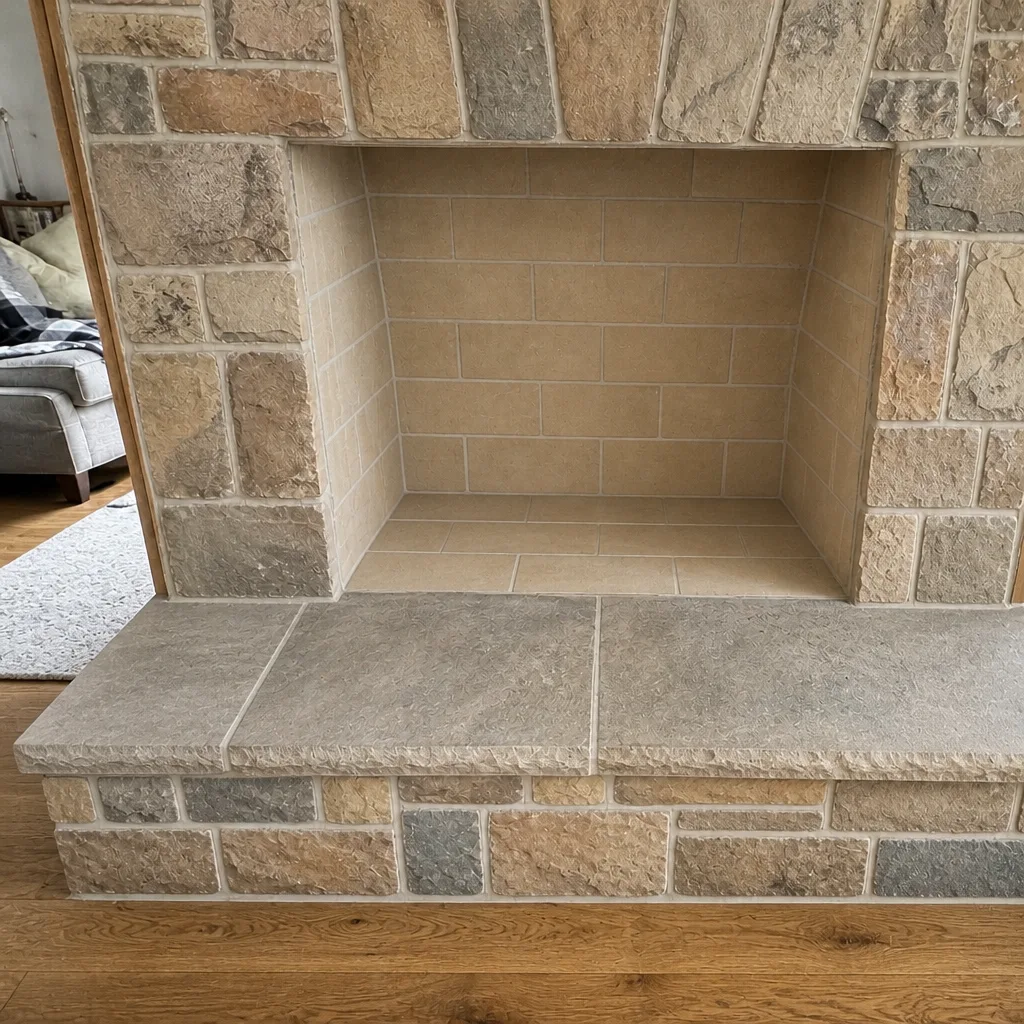
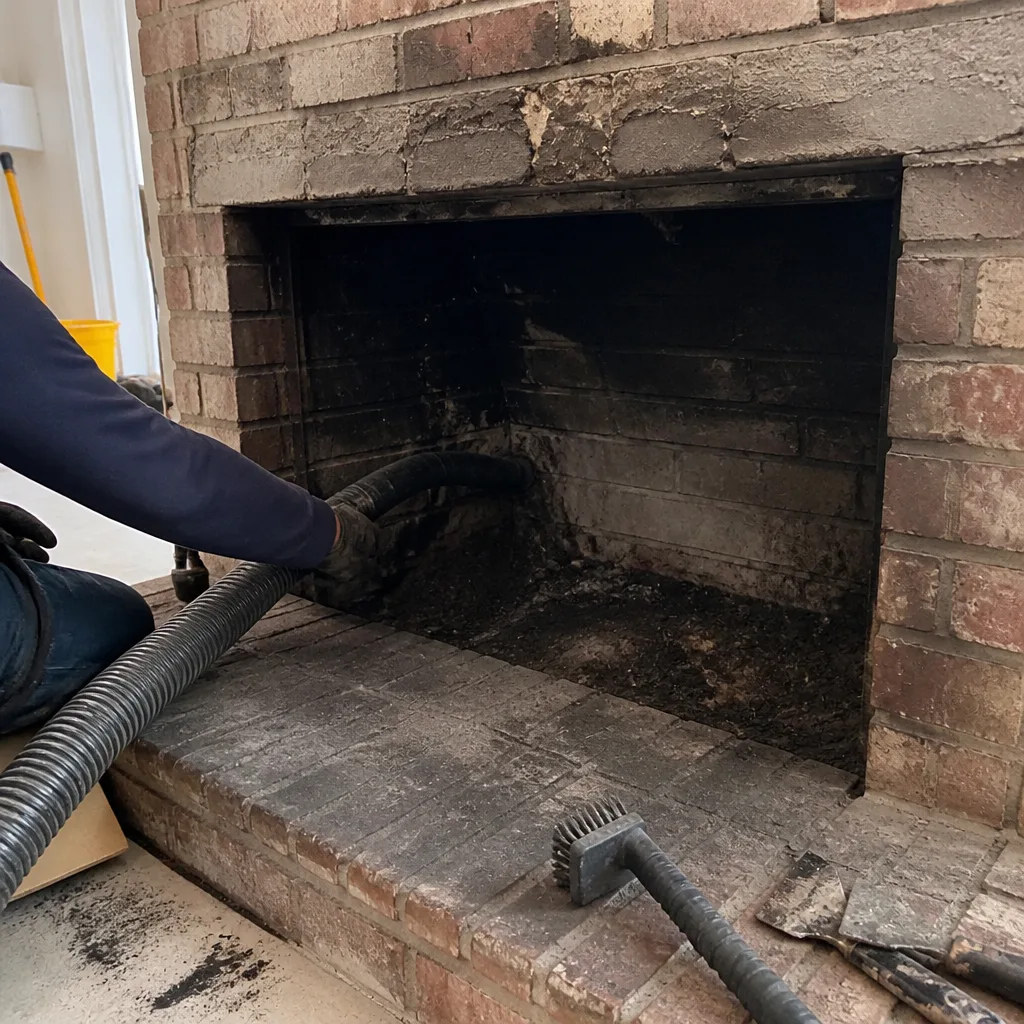
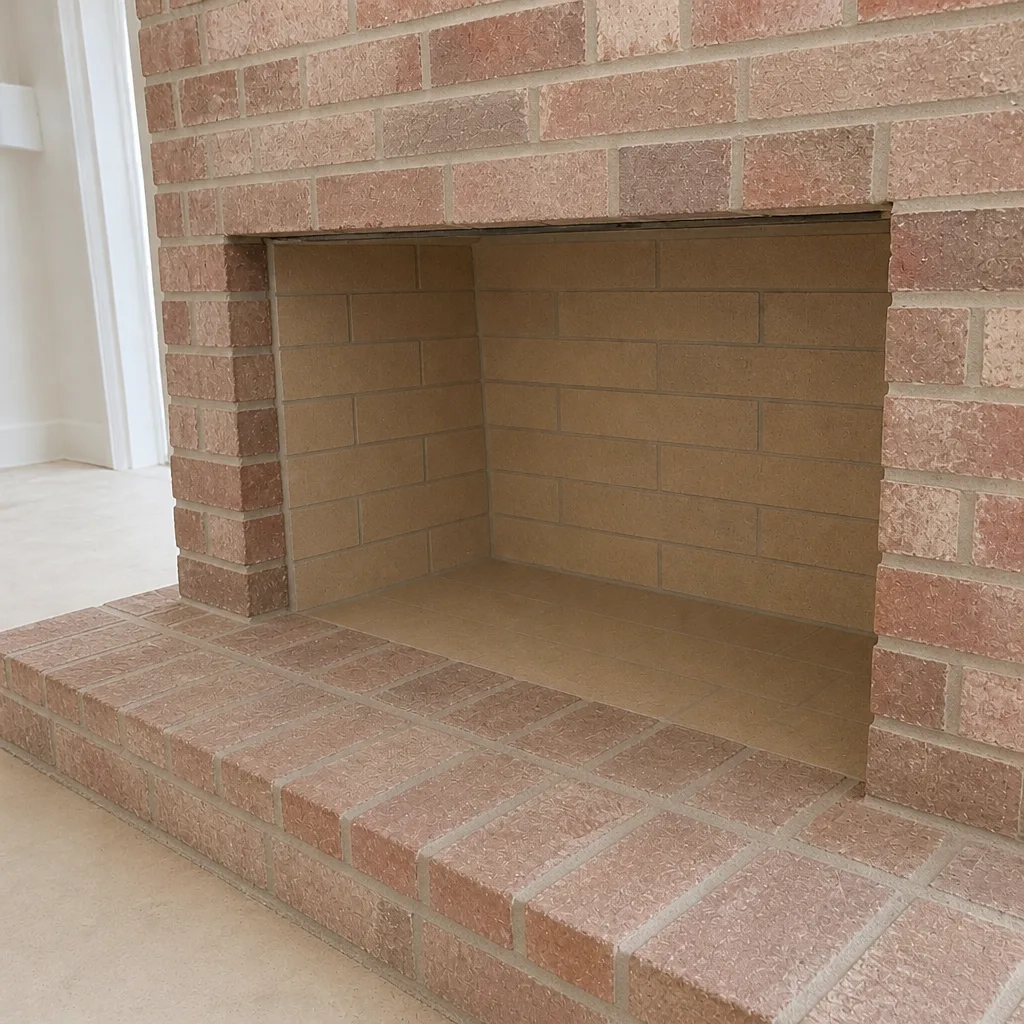
See the difference
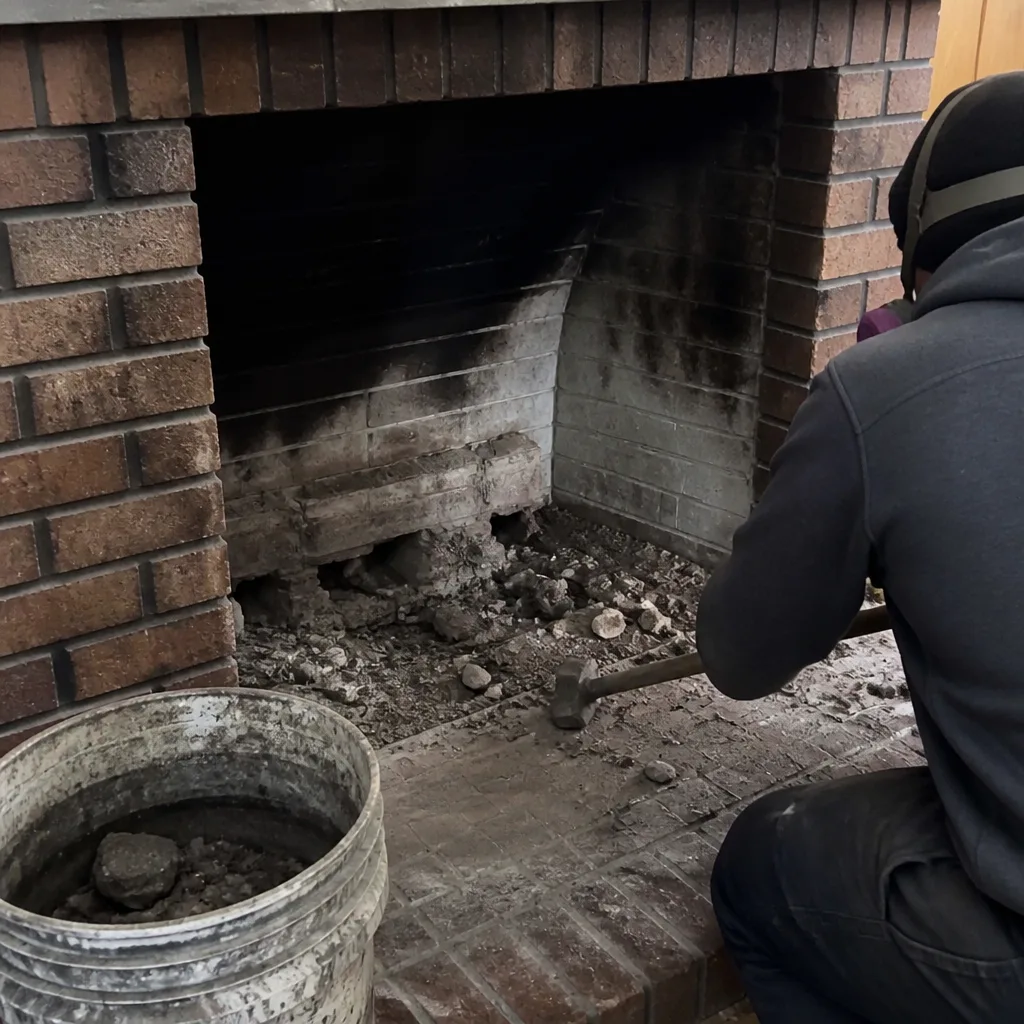 Before
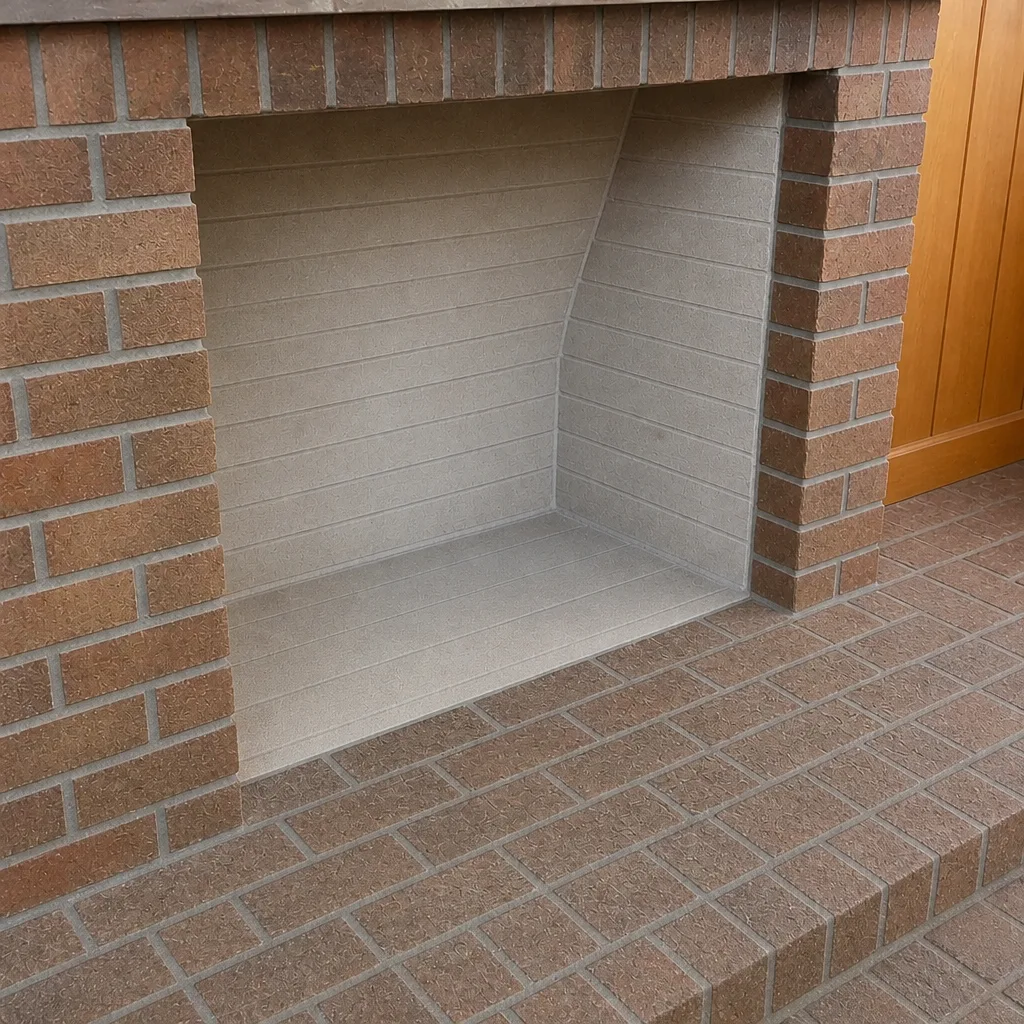 After
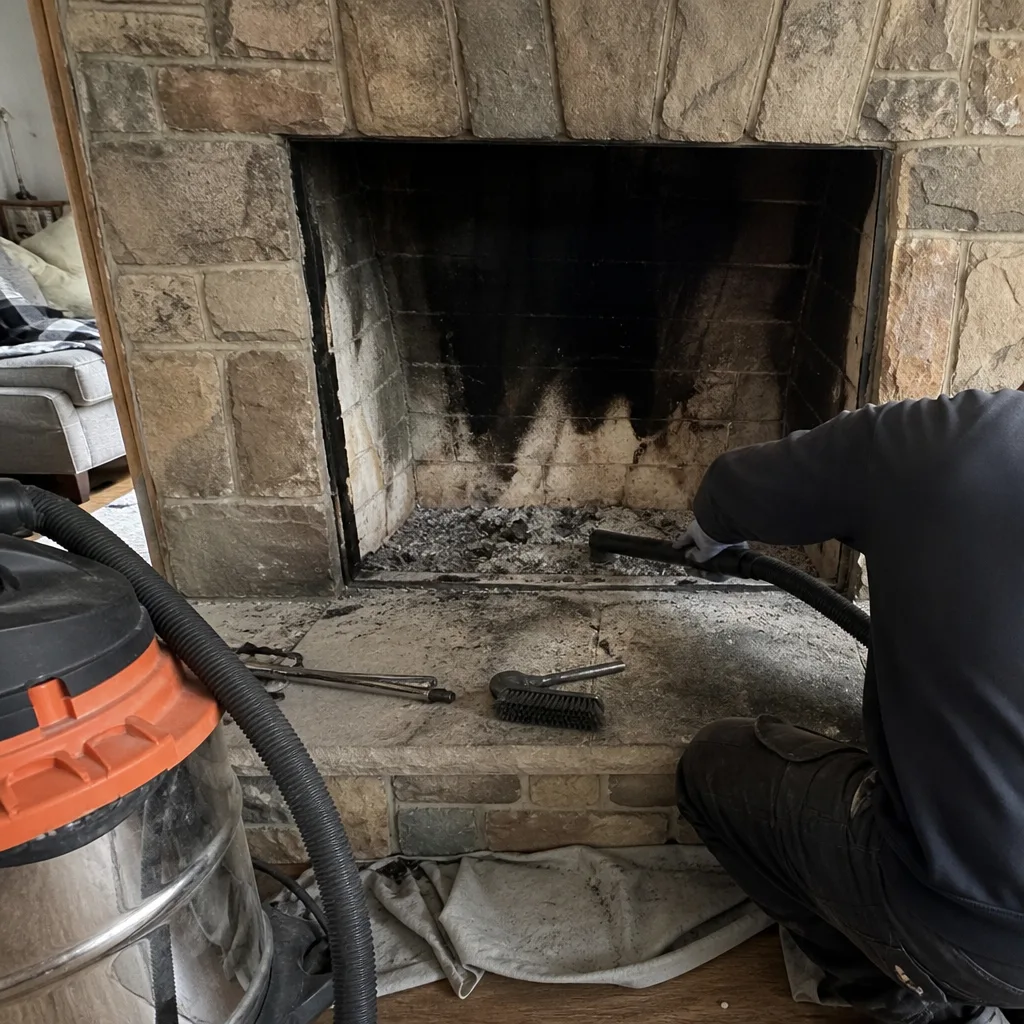 Before
 After
 Before
 After
When to Call a Professional
Call a professional if any of the following are true: smoke rolls into the room during a fire, the smell of smoke is strong when nothing is burning, you see white staining or spalling on the exterior brick, a cap is missing or damaged, you can see daylight through the flue, an animal is nesting in the chimney, or you haven’t had a camera inspection and don’t know the liner condition. Those aren’t cases for a flashlight and a guess. They’re cases for a trained sweep who will show you exactly what’s going on before quoting any work.
Federal Way Chimney Sweep Pros offers free estimates in Federal Way. Call (844) 949-4711. We answer 24/7. Fast dispatch from 7am to 7pm, Sunday through Friday. Our technicians have up to 12 years of experience on the same kinds of systems you’ll find across Federal Way neighborhoods like Twin Lakes, Redondo, and Federal Way’s west-side slopes, and we walk you through what the camera shows in plain language.
Frequently Asked Questions
A routine chimney sweep in Federal Way typically runs in the range of $180 to $340 for a standard single-flue fireplace, with the exact price set by the written estimate after we see the flue. Camera inspections and repair work are quoted separately, and you’ll have the estimate in hand before anything is booked. Call (844) 949-4711 for an exact quote. Estimates are free.
Not always. A cracked or deteriorated liner can often be resurfaced with HeatShield rather than replaced, and a DuraFlex flexible liner is the right call when the flue configuration or extent of damage requires a full reline. The camera inspection is what tells us which path applies. If a liner is intact, we say so. Nothing gets recommended without camera evidence you can see on the screen yourself.
A chimney used regularly during burning season should be swept once a year, typically before the season starts. Federal Way’s wet climate means creosote can stay damp longer than in drier areas, which makes annual cleaning more important than in a colder, drier climate. If you burn heavily or burn unseasoned wood, a mid-season look is worth considering.
Skipping a sweep lets creosote build in stages, and by the time it reaches the glazed stage it affects draft and raises fire risk in the flue. In Federal Way, moisture from our long wet season also has more time to work on mortar joints and the liner, so the damage compounds quietly. The cheapest correction is a routine sweep. The most expensive is a liner and crown repair that a yearly sweep would have caught early. Call (844) 949-4711. Estimates are free.
Summer smoke smell usually comes from moisture in old creosote off-gassing, a damper that isn’t sealing, or stack effect reversal on hot days. It’s rarely an emergency, but it does mean the flue is holding material that a sweep would clear. A sweep plus a damper check usually resolves it entirely. Call (844) 949-4711 for an exact quote.
A camera inspection is the only way to see inside the flue above the firebox, and most liner failures happen out of sight of a flashlight. It finds the problem the flashlight can’t, which is exactly what you’d want before a decision about repair. If the flue is sound, the camera inspection confirms that and you don’t buy anything you don’t need.
The Bottom Line
The most useful thing you can do for your Federal Way chimney is to read its symptoms accurately before anyone shows up. Smoke in the room on windy days is pressure. Smoke every time is blockage. Summer smell is moisture. Burning smell is draft. Staining and spalling are water. Each one has its own fix, and treating the symptom without naming the cause is the expensive path. A camera inspection either clears your chimney or shows you exactly what’s wrong, and you see it yourself. Trade-grade materials from Federal Way Chimney Sweep Pros mean the repair is built to last in this climate rather than to look finished for a season. And the same company handles the sweep, the diagnosis, and the repair, so nothing gets lost between contractors. Ready to know what’s actually going on? Call (844) 949-4711 for a free estimate. We answer 24/7. Fast dispatch from 7am to 7pm, Sunday through Friday.
Written by the team at Federal Way Chimney Sweep Pros.