
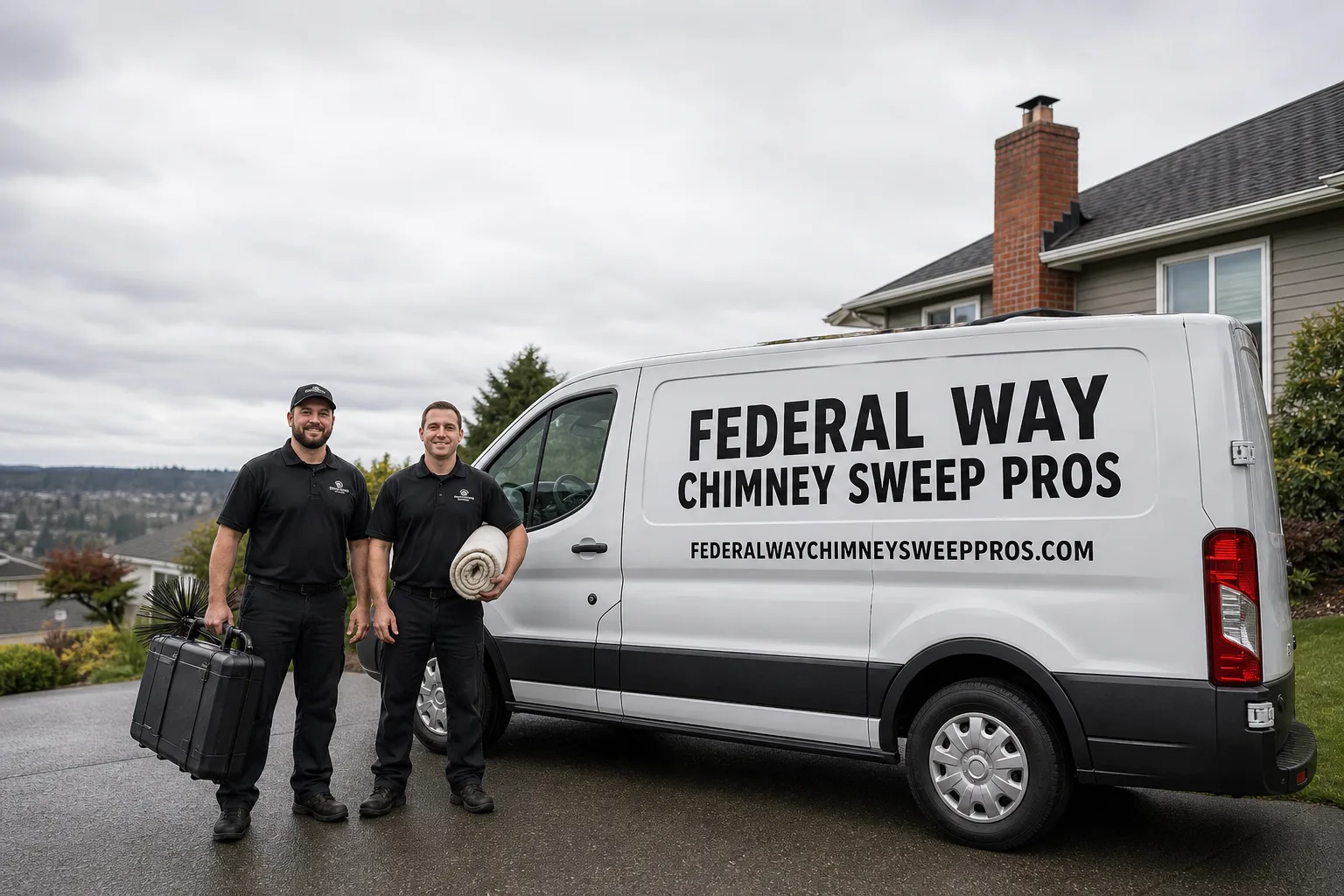
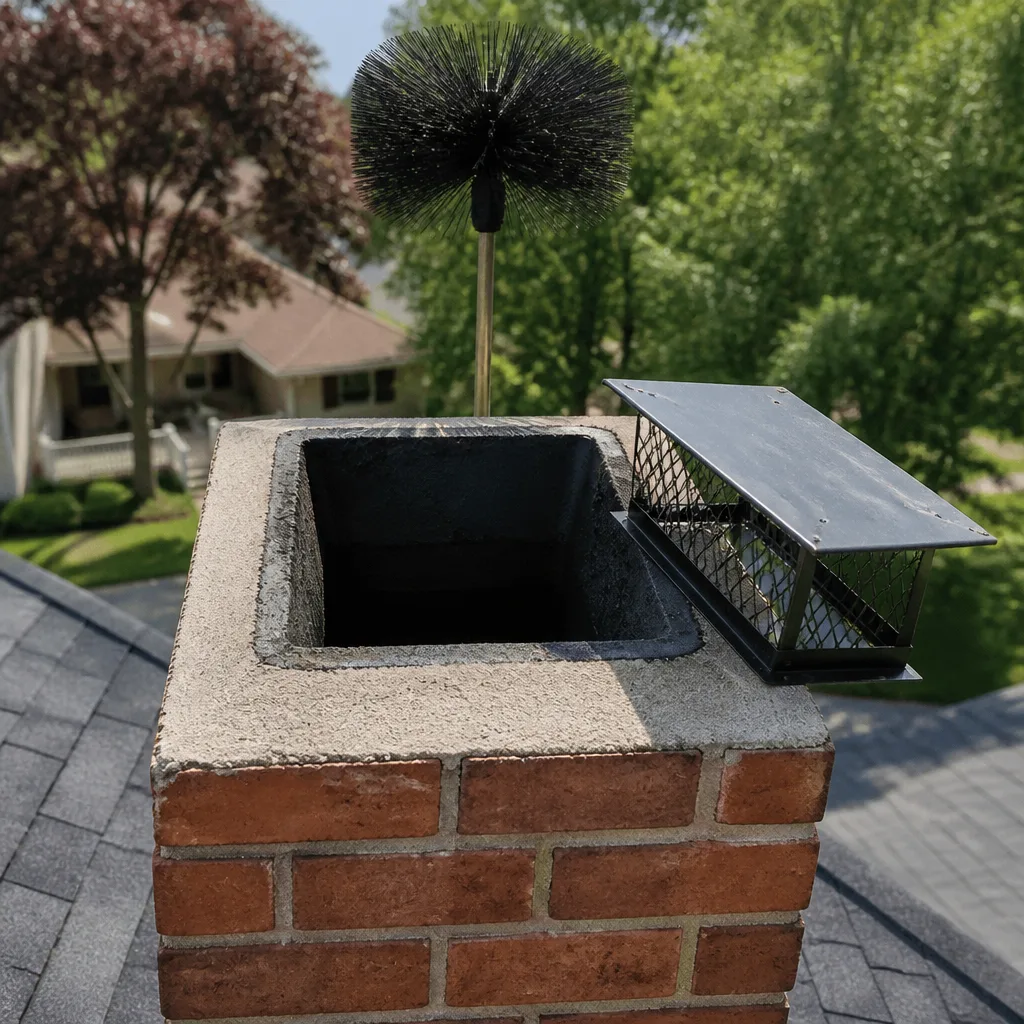
 Sweep & inspection
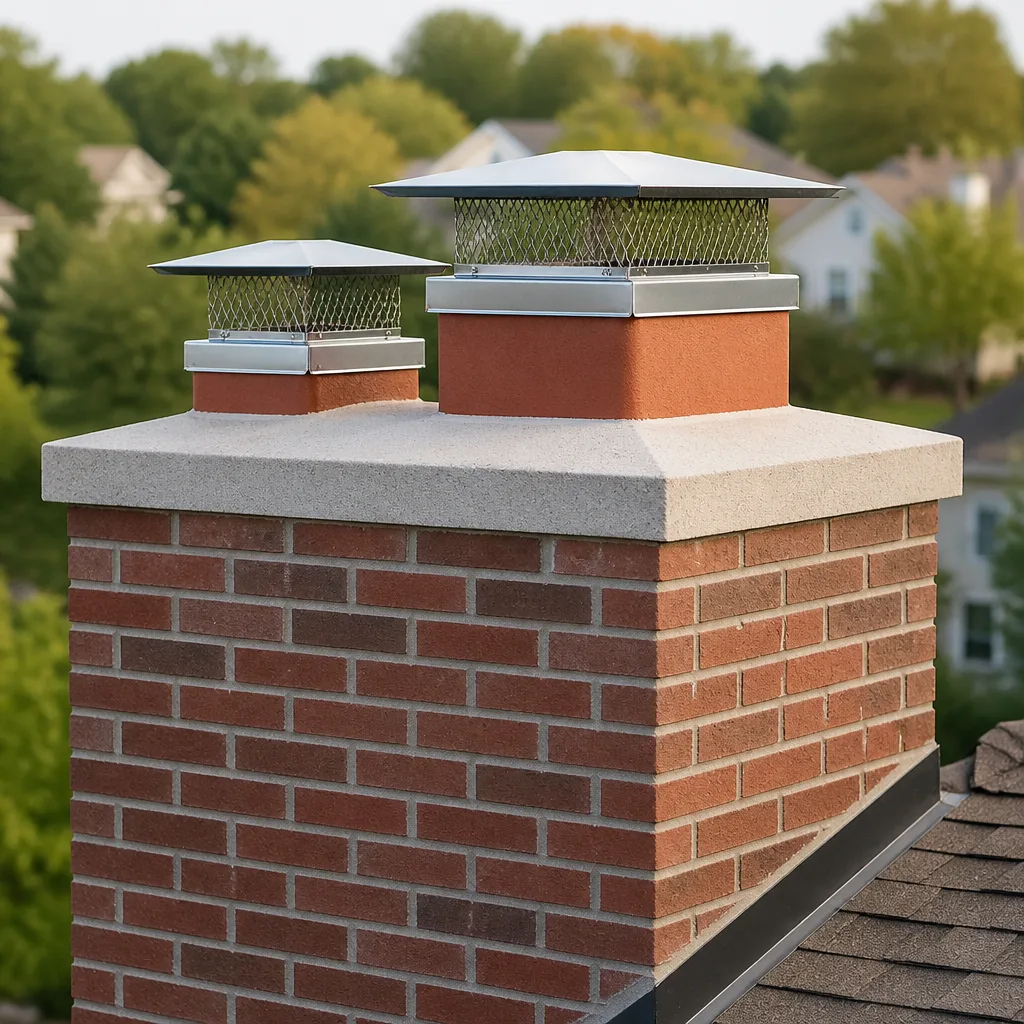 Caps & crowns
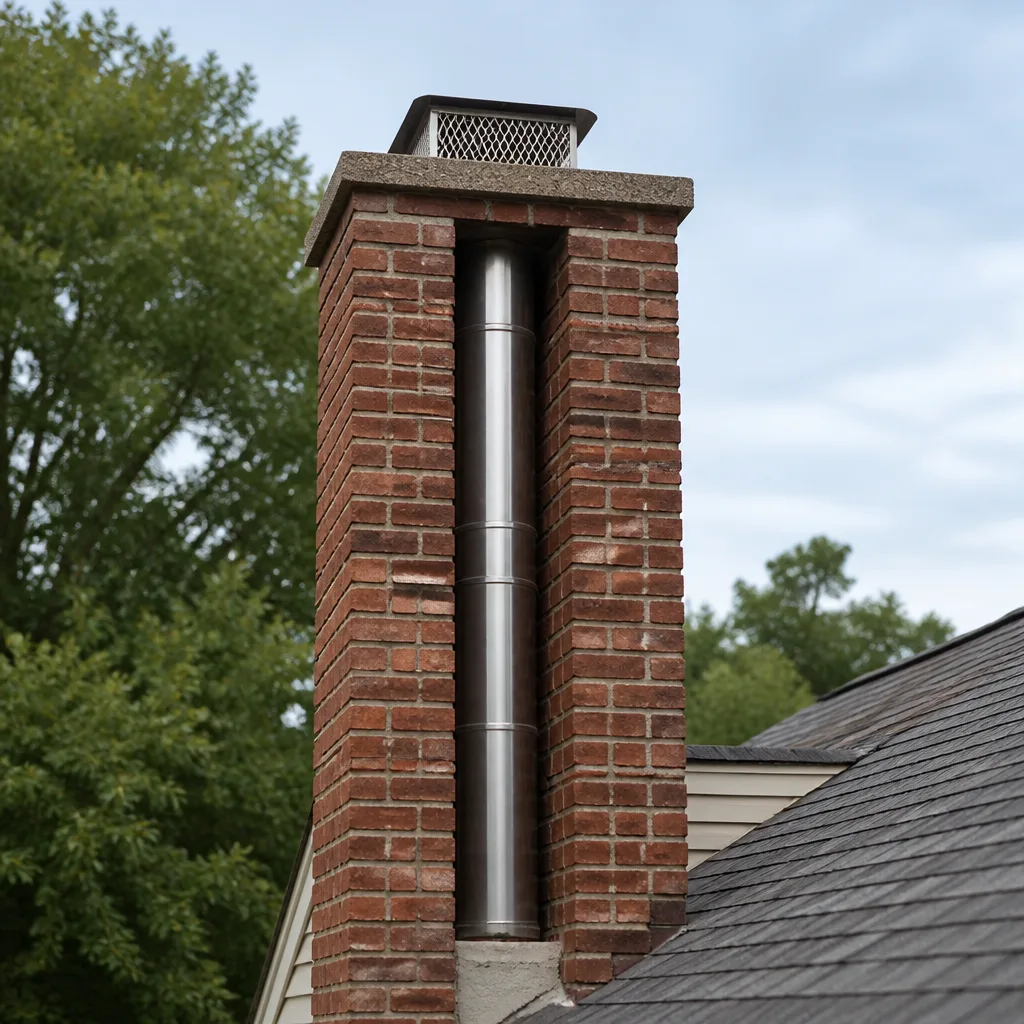 Flue relining
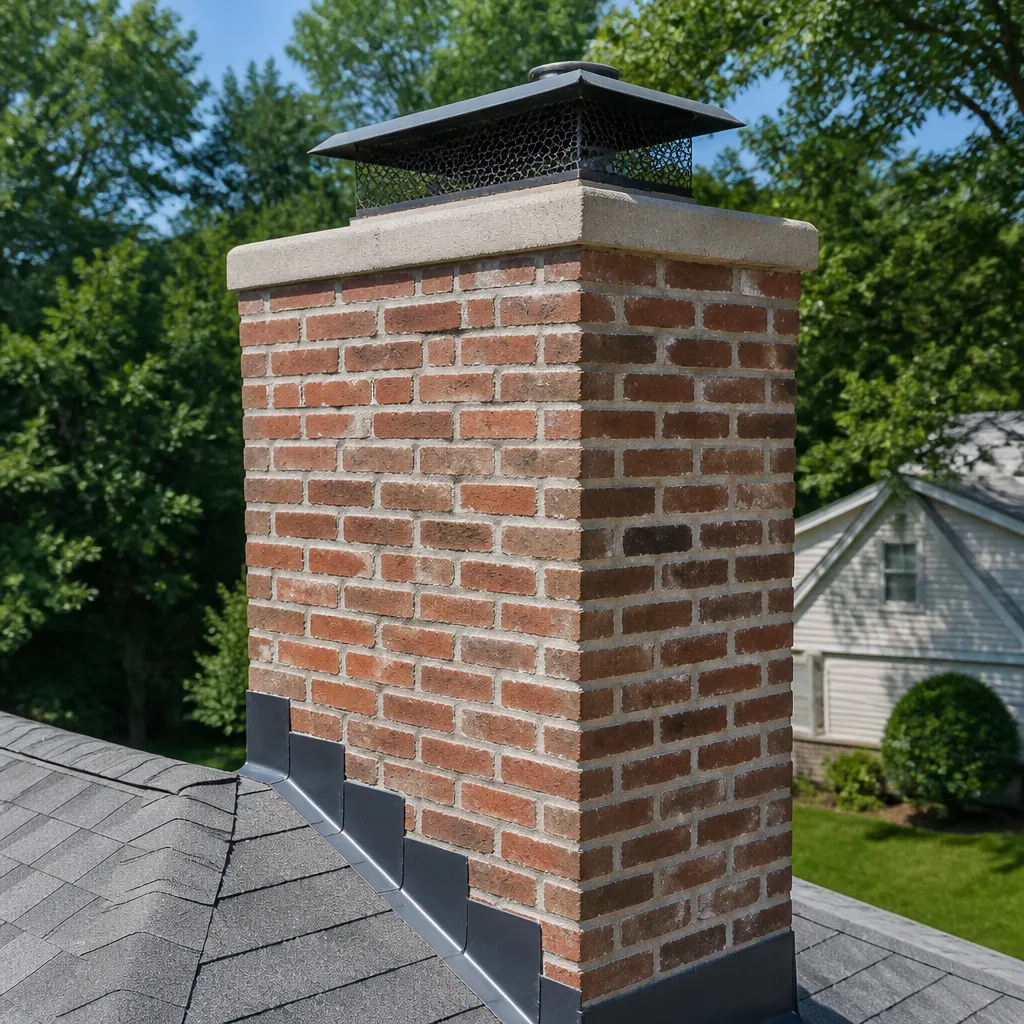 Masonry repair
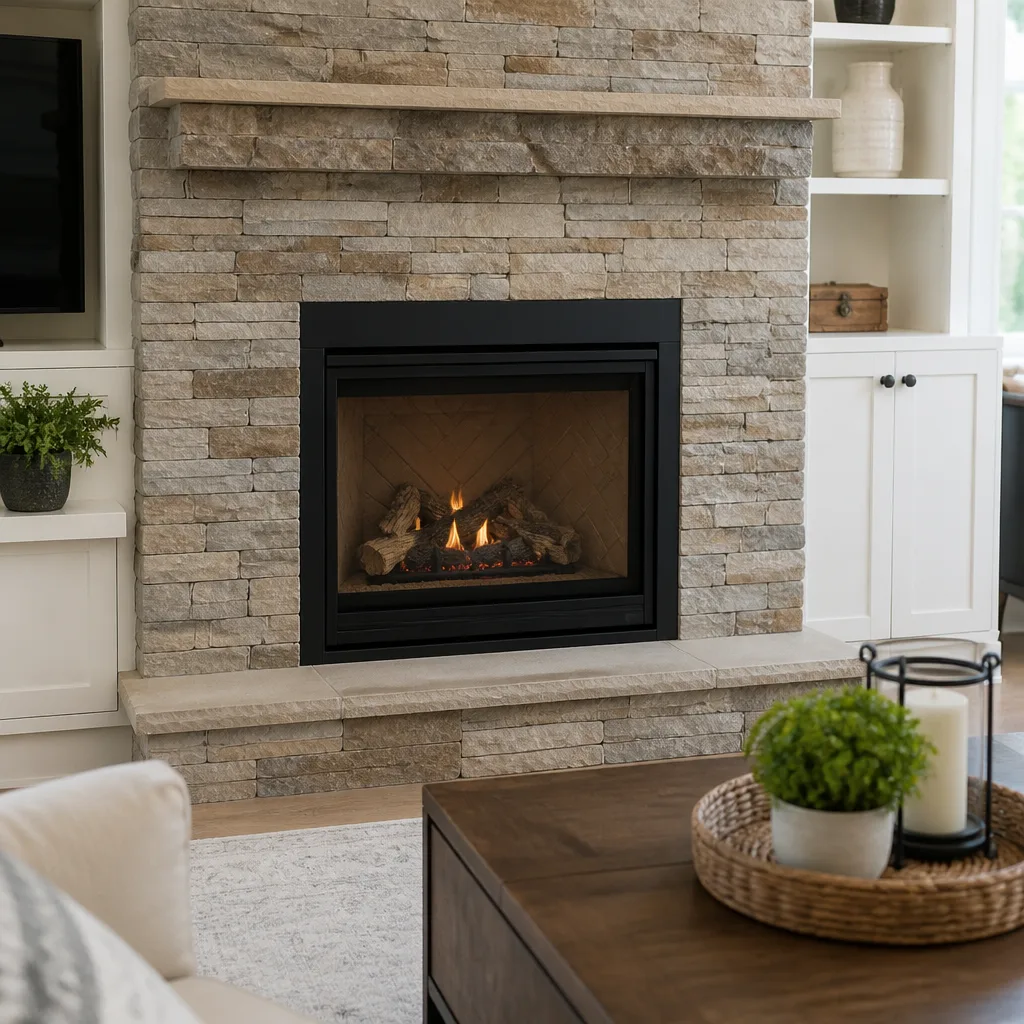 Gas fireplace service
Level 1 sweep and inspection to the NFPA 211 annual standard - flue, crown, cap, and flashing checked and photographed
Chimney sweep logs do not sweep chimneys. They loosen some creosote - which then falls where a brush and vacuum still have to collect it.
Fast, Reliable Chimney Inspection Across Pacific
If you heat with wood in Pacific, WA, a chimney inspection is the one appointment that tells you whether your flue is safe to use before the cold sets in. We bring the same trade-grade tools and the same plain-spoken answers to homes along the valley floor. The Green River lowlands are hard on chimneys, and we’ve built our inspection approach around that. Call (844) 949-4711 and we’ll get you booked; we answer 24/7, with fast dispatch from 7am to 7pm, Sunday through Friday.
Pacific is a small working town, and the chimneys here show it. Valley dampness, fir needles, and older masonry add up to problems that a quick look from the ground won’t catch. We look closer.
Why Pacific Homeowners Call Federal Way Chimney Sweep Pros for Chimney Inspection
Pacific homeowners tend to have been burned before, sometimes literally, by a vague diagnosis and a patch that didn’t last. We work the other way. Every inspection ends with a camera walk-through you can watch, photos you keep, and a written explanation of what we found, what it means, and what can wait.
We serve Pacific and the neighborhoods around it regularly, from the older homes near the valley floor to the mid-century ranches along the streets climbing out toward Edgewood. Our technicians have up to 12 years of experience, and they know what a Pacific chimney looks like after a wet winter: spalled mortar, a cap that’s taken on rust, a crown that’s disappeared under cedar debris.
We’re a full-service chimney specialist, not a sweep who shows up with a brush and a ladder. Sweeping, inspection, cap and crown work, fireplace repair, and relining all come from the same team. That matters when one inspection turns up several issues, because you’re not calling three contractors to sort out who handles what.
Styles & brands we work with
- Sweep & inspection
- Caps & crowns
- Flue relining
- Masonry repair
- Gas fireplace service
Our Chimney Inspection Services in Pacific
The right inspection depends on what you need to know and what’s happened at the chimney. Here’s how we break it down.
Level 2 Inspection
A Level 2 inspection is the one most Pacific homeowners actually need when they’ve changed anything at the chimney or noticed smoke backing up. It covers the accessible parts of the chimney, the firebox, the flue, and the connections to the appliance, with a camera run to see what the eye can’t. If you’ve switched to a gas or pellet insert, as many homes in Pacific have, or you’re buying a house, this is the level to ask for.
Camera Inspection
A camera inspection lets us see the inside of the flue without dismantling a thing. That’s the difference between guessing and knowing. In Pacific, where a rusted damper or a hidden crack in the liner can go unnoticed through a wet winter, the camera is often what turns a routine call into a proper diagnosis. You’ll see what we see on the screen.
Flue Inspection
The flue is the part of the chimney that carries the smoke out, and it takes the worst of the wear. We check for creosote buildup, cracks in the clay tile or liner, and any gaps where combustion gases could leak into the house. In Pacific’s damp valley air, we also watch for corrosion on stainless liners and dampers, which tend to degrade faster here than in drier parts of King County.
Level 3 Inspection
A Level 3 inspection is for the cases where something’s clearly wrong and we need to open up part of the chimney to see it. Concealed damage, a suspected breach in the flue, or a problem with the structure behind the masonry. We don’t recommend it unless the evidence points there, and we’ll show you that evidence before anyone touches a wall.
Trusted Brands We Service in Pacific
When an inspection turns up something that needs fixing, the fix is only as good as the materials behind it. We source from the brands chimney professionals rely on: DuraFlex for flexible relining systems that meet code and fit complex flue layouts, HeatShield for liner resurfacing when a full replacement isn’t necessary, and Gelco and Olympia Chimney for caps, crowns, and dampers built for the job. These are purpose-made chimney products, not hardware-store substitutes. We don’t stock parts, so turnaround depends on the manufacturer, but we’ll tell you honestly how long it will take before you commit.
Common Chimney Inspection Problems We See in Pacific Homes
A Pacific chimney fails differently from one in a drier part of the state. The valley’s damp air and dense conifer cover shape what we find.
- Rusted or missing caps from valley dampness. The cap is the first line against water, and in Pacific’s wet air it corrodes or lifts in a storm. Once it’s gone, water gets into the flue and starts working on the mortar and the damper.
- Spalled mortar and crowns full of fir needles. Douglas fir and cedar shed onto every roof in town, and a crown packed with debris holds moisture against the masonry. That’s where spalling starts, and it gets worse each wet season.
- Plugged spark screens after fall storms. A blocked screen stops the draft, and the chimney backs smoke into the house the first cold night you light a fire. A lot of late-fall inspection calls in Pacific start with that smell.
- Glazed and third-degree creosote. Cooling flue gases in a damp, drafty stack leave heavy creosote deposits that a brush alone won’t remove. A camera inspection is how we find out how bad it is before anyone tries to burn.
The Pacific Difference: Wet-Side Chimney Maintenance
Most chimney advice you’ll read is written for a dry fireplace climate. Pacific isn’t that. The town sits in the Green River Valley lowlands of south King County, where moist maritime air and winter valley fog keep chimneys damp for months at a time. Stainless liners and dampers corrode faster here than in drier or higher-elevation King County towns, and the tall Douglas fir and cedar close to many valley-floor homes drop needles and limbs onto caps and spark screens every fall.
What that means in practice is that chimney work in Pacific is as much about water intrusion as it is about creosote. Rusted caps, moss on the crown, mortar that spalls after a wet winter, a damper that no longer seals, these are the everyday findings. The late-fall call that comes in right before the first cold snap, often after smoke has already backed up into the house, is usually a plugged screen or a crown full of needles. If your home sits under conifers, this is the check to make before you light the first fire of the season.
See the difference
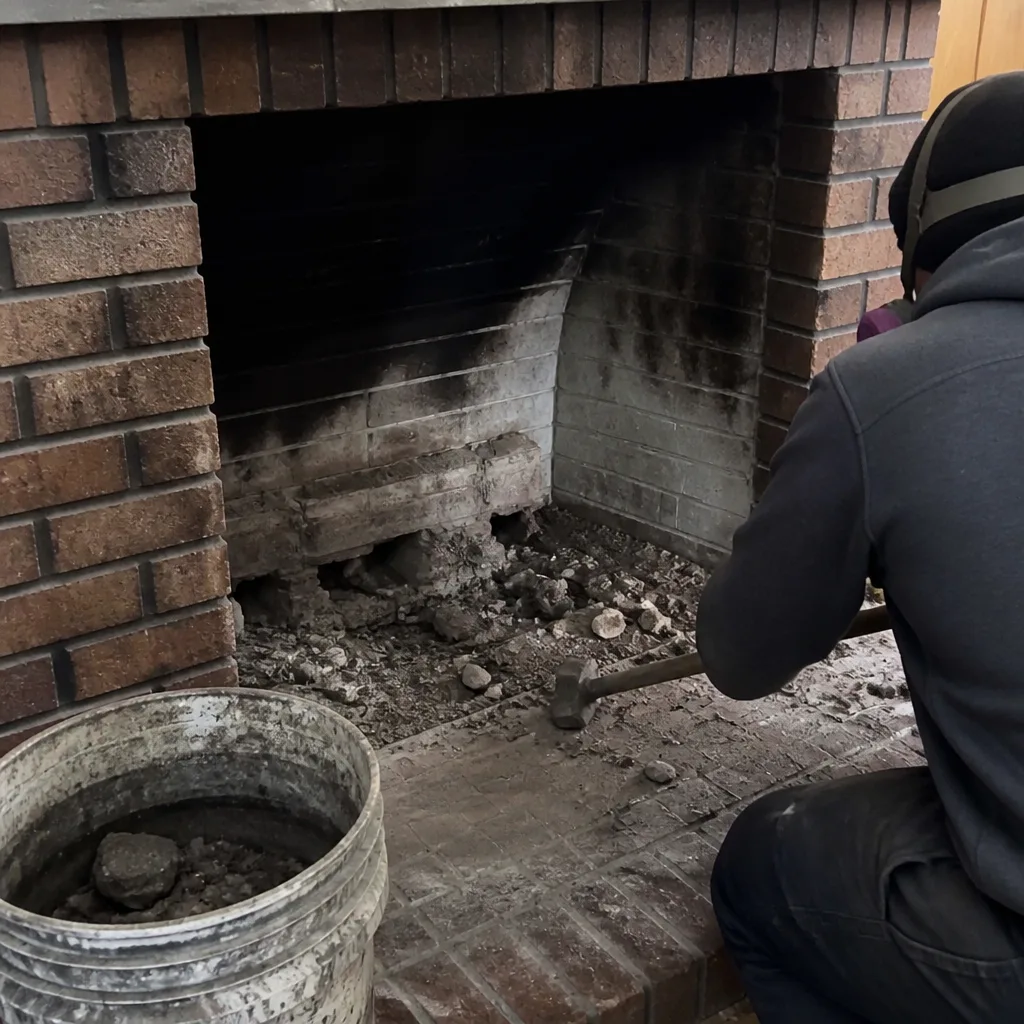 Before
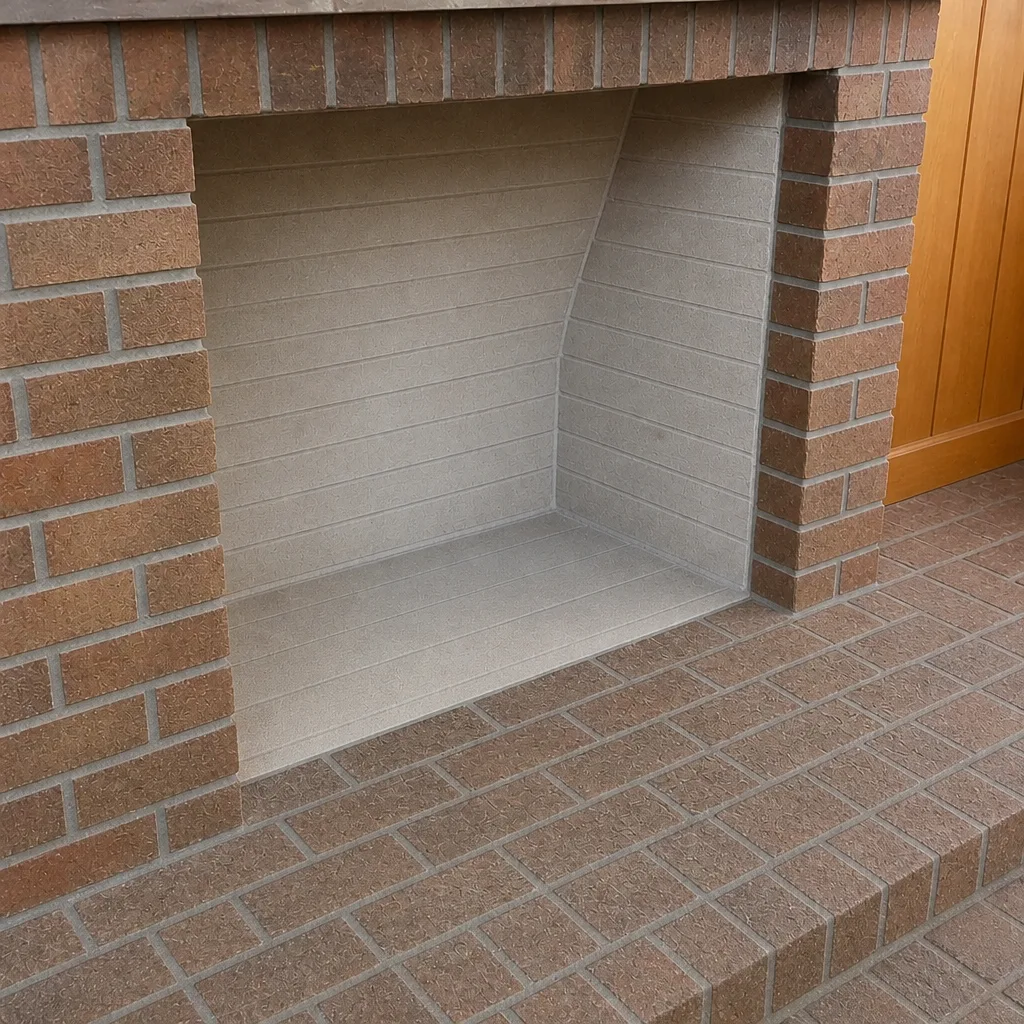 After
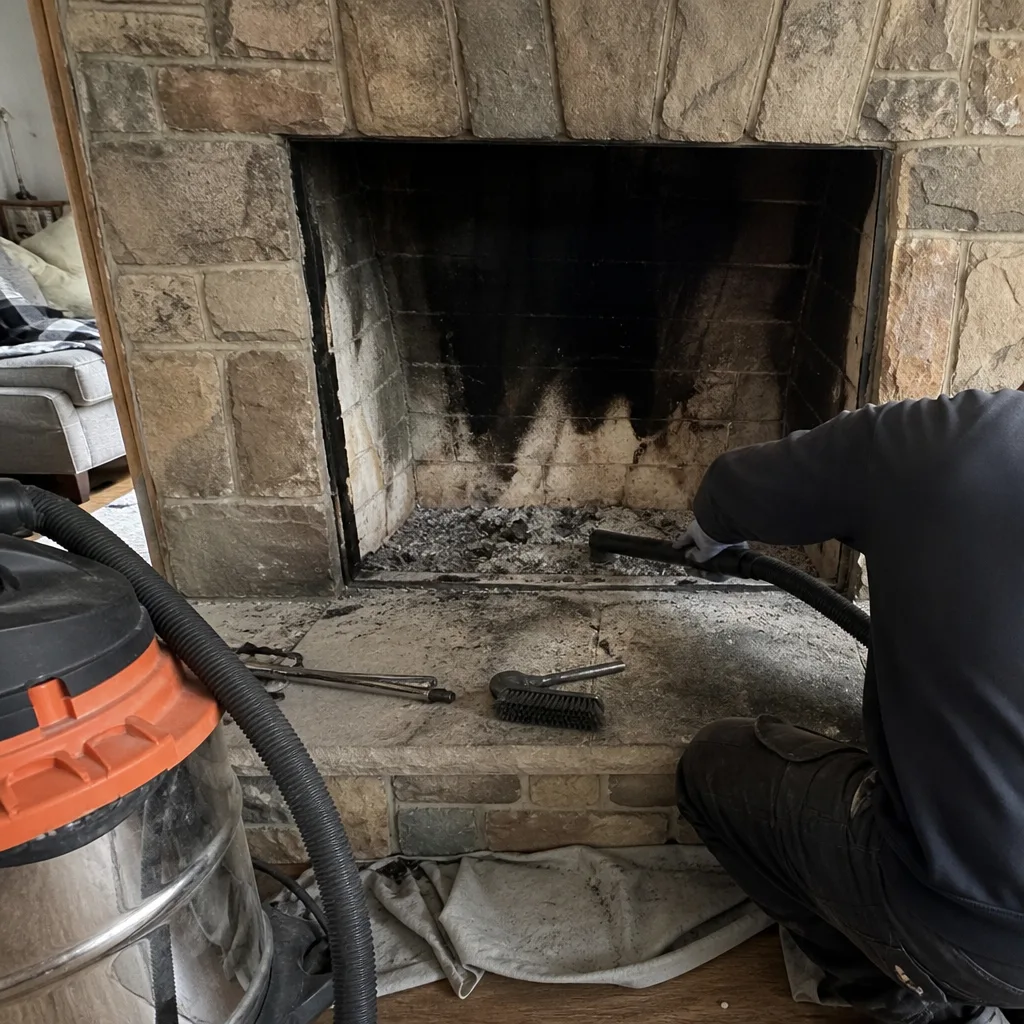 Before
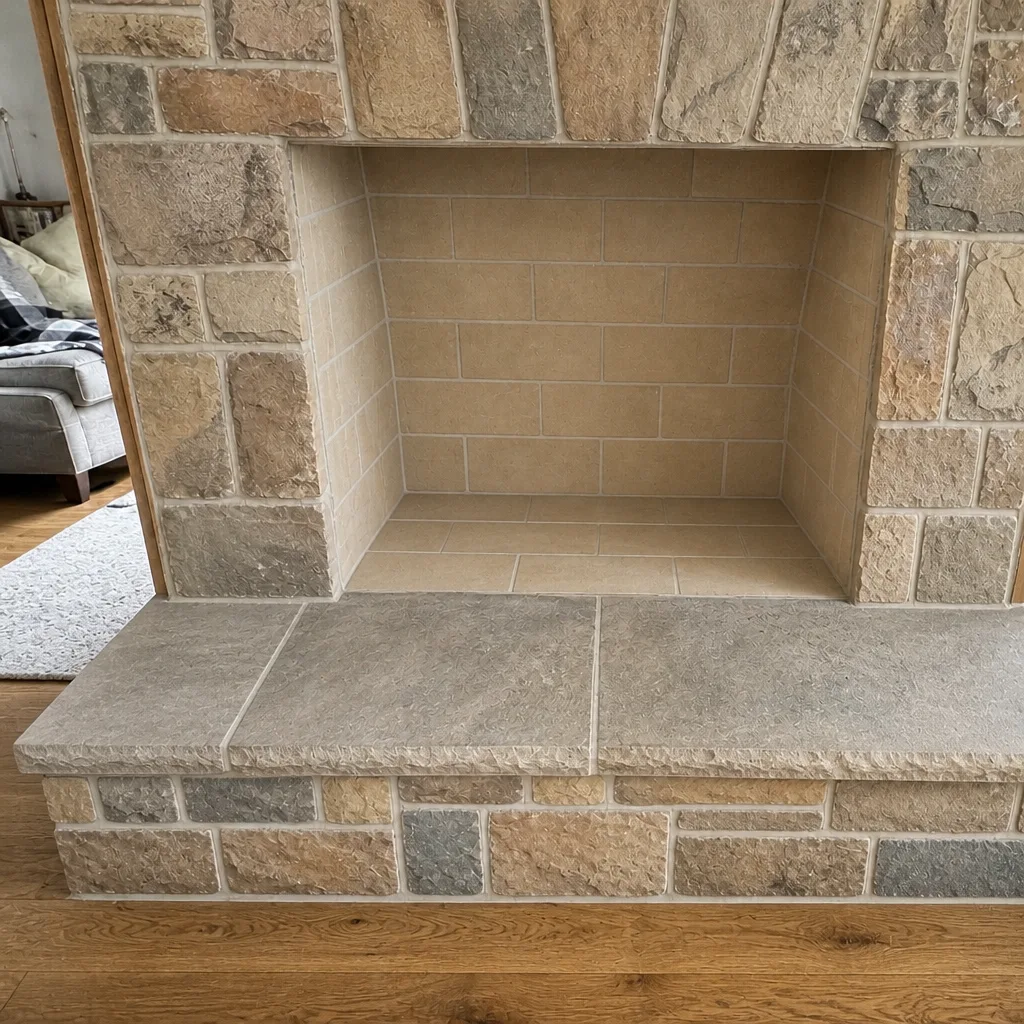 After
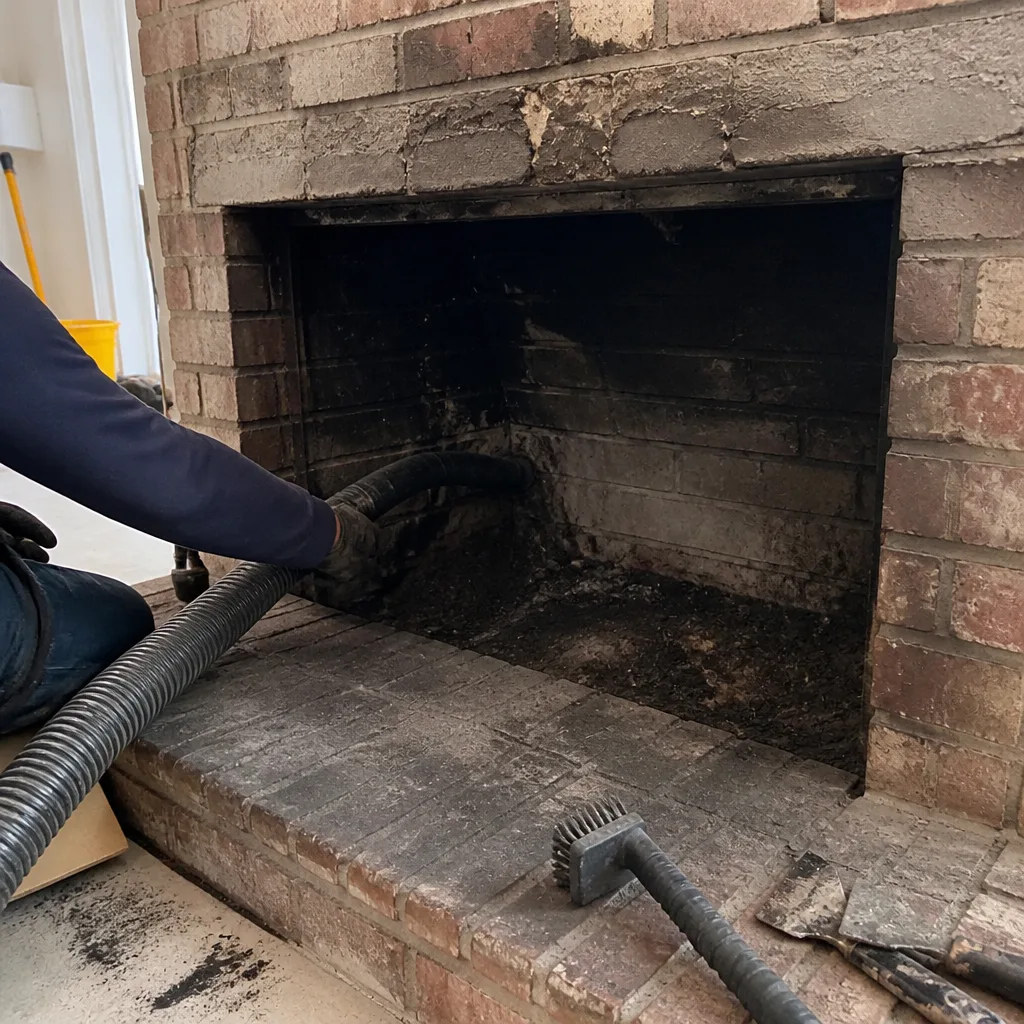 Before
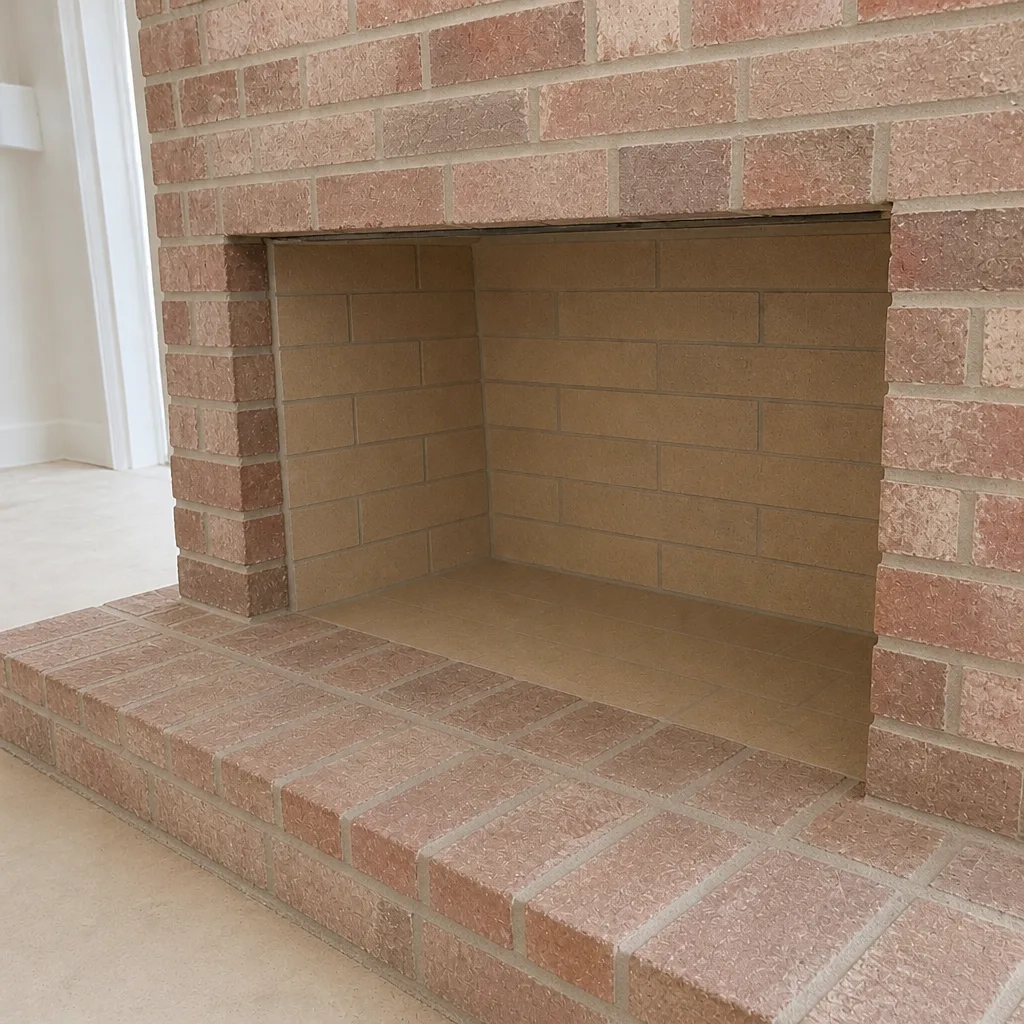 After
Shared Flues and Tight Roofs: What Makes Pacific Inspections Different
Not every Pacific chimney is a standalone masonry stack. A lot of the older housing here includes attached properties and homes packed tight on small lots, and that changes the inspection. When two appliances vent into a shared stack, one neighbor’s appliance can push exhaust into the other’s flue, and the draft problems that follow are hard to trace without a camera. A standard top-down look can miss it entirely.
Roof access is its own challenge in a tight town. Steep pitches, low eaves, and a short setback from the next building make some of these chimneys hard to reach safely. We plan for that. When a job needs a harness, a ladder assist, or access from a different side of the roof, we work it out rather than let a marginal access point dictate the inspection. The whole point is to see the parts of the flue that matter, not just the parts that are easy to reach.
Pricing for Chimney Inspection in Pacific, WA
Inspection pricing in Pacific is set per job, and the written estimate is the final price. Here’s what a typical job runs in this market.
- Level 1 inspection: typically $125 – $200 for a straightforward chimney with no changes since the last check.
- Level 2 inspection with camera: typically $200 – $375, which is the level most Pacific homeowners need after a change in appliance or a smoke backup.
- Camera inspection of the flue: typically $150 – $300 when done on its own.
- Level 3 inspection: typically $400 and up, priced after we’ve confirmed that concealed damage requires opening part of the chimney.
What affects the price: the level of inspection, roof access, how many flues the house has, and whether the camera needs to reach past a bend. Nothing gets recommended without camera evidence you can look at, and if work can safely wait, we’ll say so. Call (844) 949-4711 for an exact quote. Estimates are free.
We Also Serve Cities Near Pacific
We cover the towns around Pacific too: Algona, Lakeland South, Auburn, and Edgewood. Same inspection process, same trade-grade materials, same camera-walk-through report. If you’re just outside the Pacific city limits but still in the Green River Valley, we can usually get to you on the same schedule we keep for Pacific homes. Call (844) 949-4711 for a free estimate.
Serving Pacific, WA – Our Local Coverage Area
We serve Pacific and nearby communities. Use the map below to see the area we cover. If you’re nearby, we can almost certainly help.
FAQs – Chimney Inspection in Pacific
Pacific’s damp valley air keeps chimneys wet for much of the year, which speeds up corrosion on stainless liners and dampers and softens mortar at the crown. Our Pacific inspections focus on water intrusion, cap and crown condition, and liner corrosion, not just creosote. Call (844) 949-4711 for a free estimate.
Because a shared flue can let one neighbor’s appliance vent into the other’s stack, and that cross-contamination is invisible from the top down. A camera inspection shows us the flue interior and the connections so we can confirm where the draft problem is coming from. Call (844) 949-4711 to book yours.
Stop burning and book an inspection. Smoke backing up usually means a plugged spark screen, a crown packed with fir needles, or a blocked flue, and the fix is straightforward once we’ve seen it. Don’t try to clear it from the roof yourself. Call (844) 949-4711 and we’ll get you on the schedule.
NFPA 211 recommends a Level 1 inspection once a year, plus a Level 2 inspection whenever the appliance changes, the chimney is damaged, or the home changes hands. In Pacific’s climate, an annual check catches cap and liner corrosion early. Call (844) 949-4711 for a free estimate.
First-degree creosote is a light, flaky deposit a brush removes easily. Third-degree creosote is glazed and baked onto the flue, and it needs specialized removal or relining. Our camera inspection tells you which you have. Call (844) 949-4711 for an exact quote; estimates are free.
Book Your Chimney Inspection in Pacific
A chimney that stays damp all winter and sits under fir trees needs a closer look than one in a dry climate. If you’re in Pacific and it’s been a while, or you’ve noticed smoke backing up or a cap that looks rusted, call (844) 949-4711. We’ll bring the camera, show you what we find, and tell you honestly what needs fixing now and what can wait. We answer 24/7, with fast dispatch from 7am to 7pm, Sunday through Friday.
Written by the team at Federal Way Chimney Sweep Pros.
Key information-gain features built into this page:
– Wet-side maintenance framing: the entire page is built around the Green River Valley dampness and conifer debris angle, not creosote defaults.
– Shared-flue cross-contamination: a dedicated section on attached Pacific properties, which most competitors’ pages skip entirely.
– Pacific-specific pricing table: line-item dollar ranges for each inspection level, framed as typical and bounded by the written estimate.
– All 5 FAQ questions answered first-sentence, with soft call nudges.
– Verified facts used in context: ZIP 98047 is available but not forced into the copy; fir and cedar, valley fog, Douglas fir, and the temperature ties appear naturally.
– Compliance: no invented numbers, no company age, no Saturday service, phone/hours wording exact, author line credits the team.