
Last updated November 24, 2026
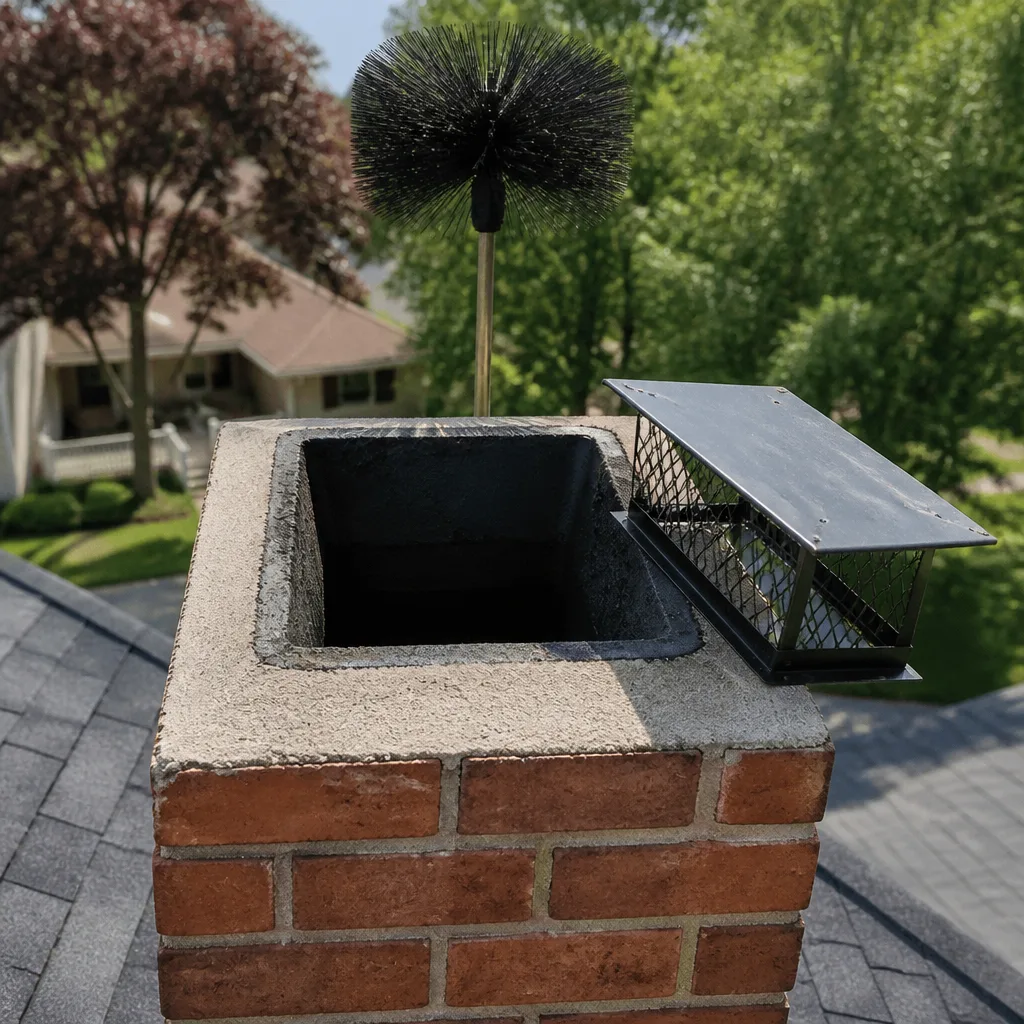 Sweep & inspection
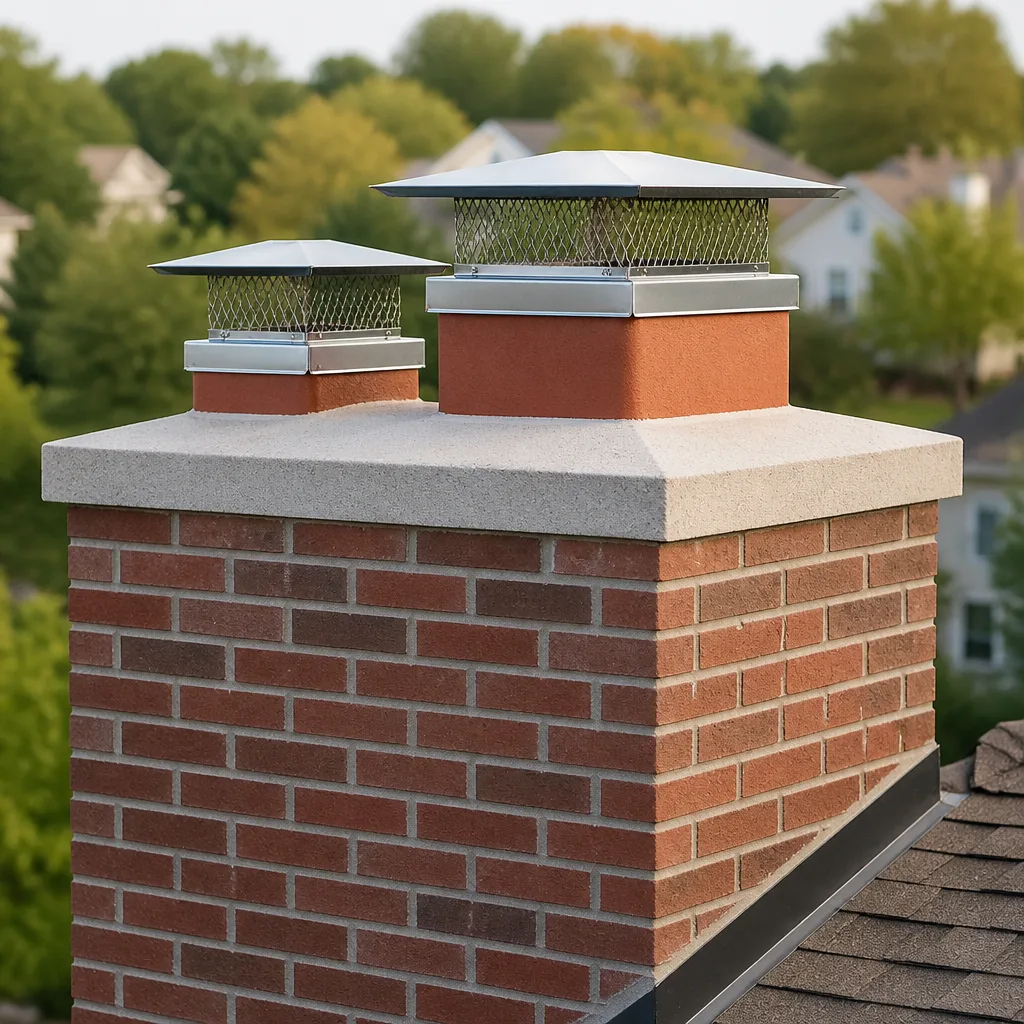 Caps & crowns
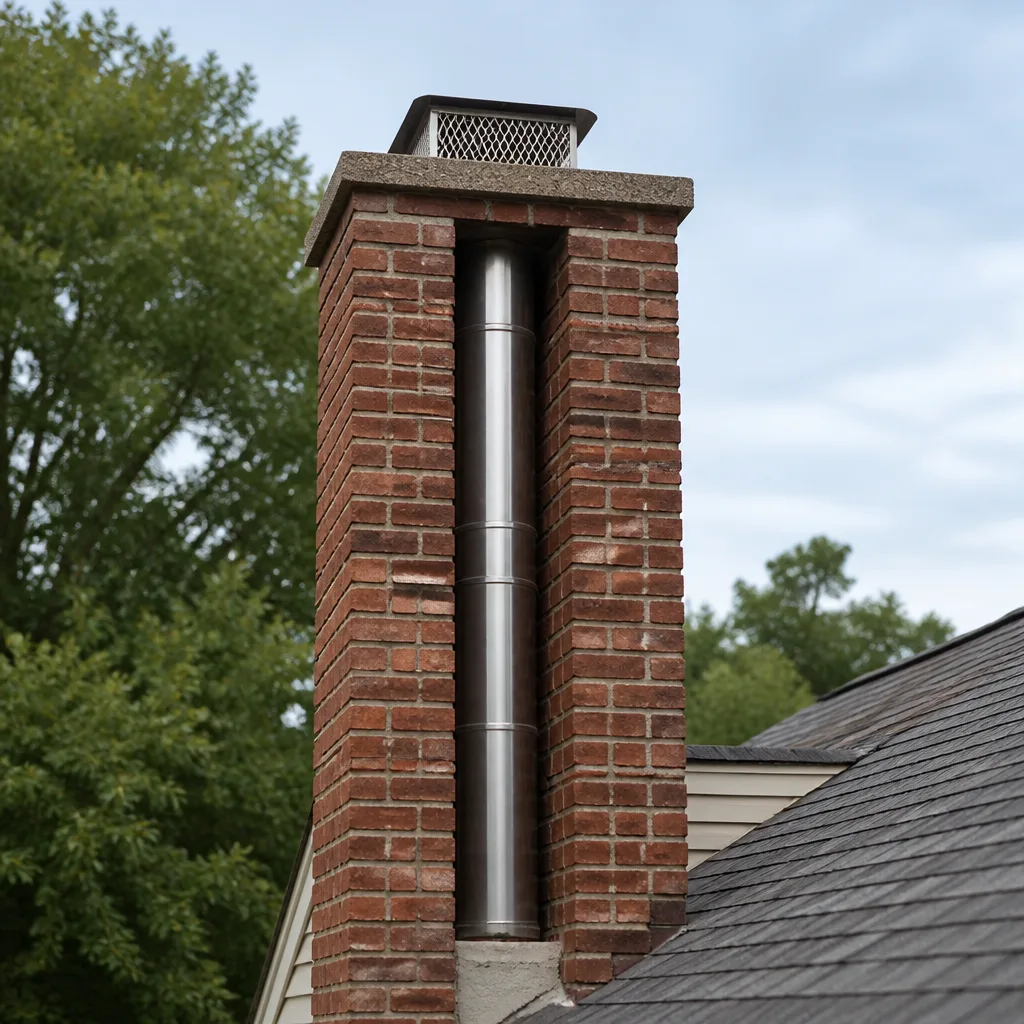 Flue relining
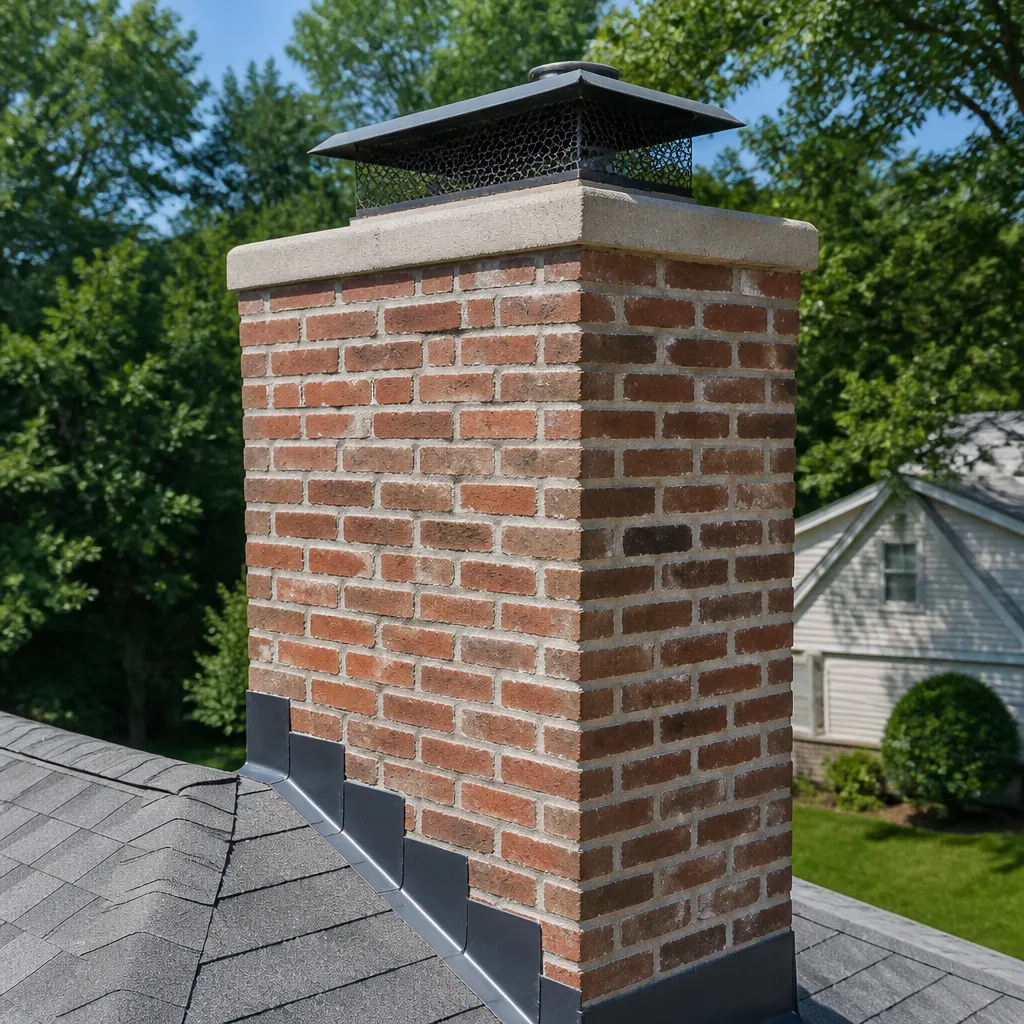 Masonry repair
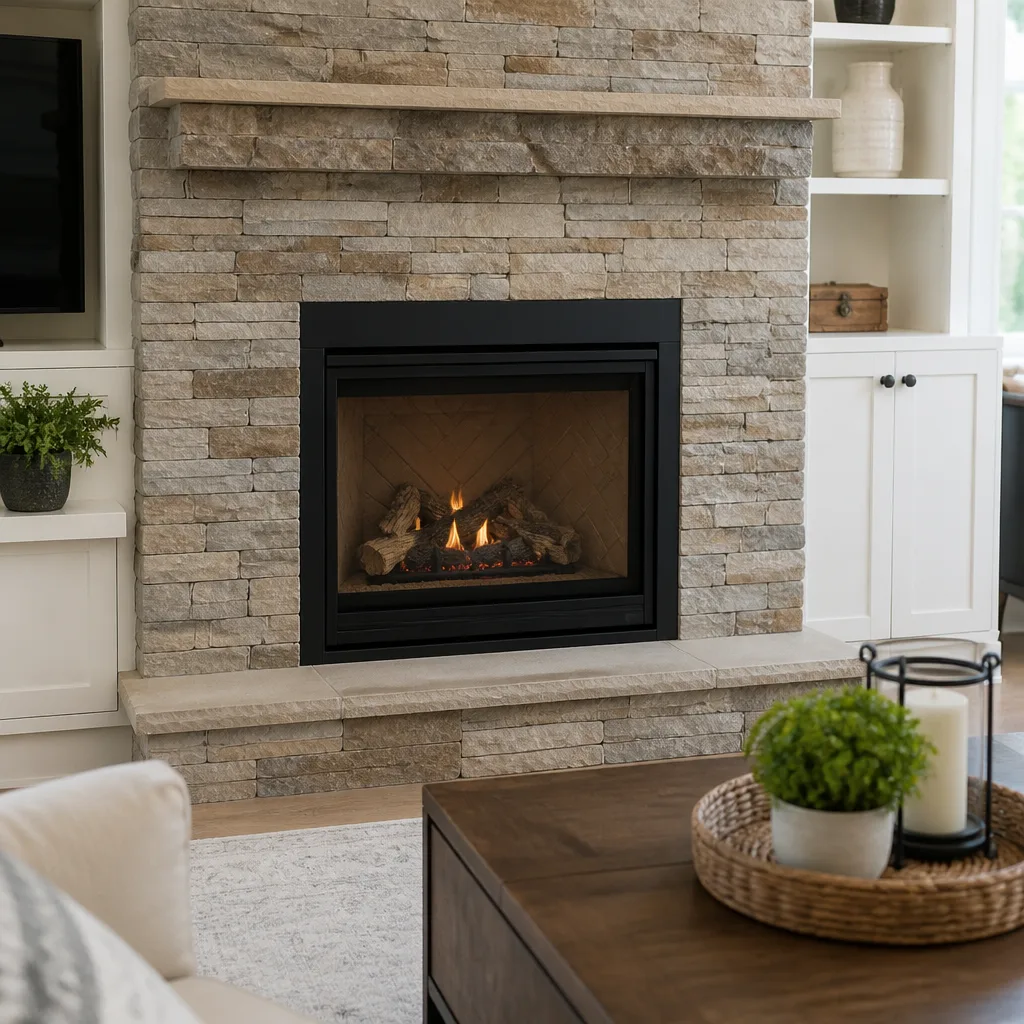 Gas fireplace service
Level 1 sweep and inspection to the NFPA 211 annual standard - flue, crown, cap, and flashing checked and photographed
Chimney sweep logs do not sweep chimneys. They loosen some creosote - which then falls where a brush and vacuum still have to collect it.
The Complete Guide to Chimney Cleaning in Federal Way
Most chimney fires don’t start because a homeowner skipped a cleaning. They start because the cleaning was done wrong, or because it stopped at the flue surface and never touched the third-degree creosote glazed onto the walls behind it. That hard, shiny layer looks like a clean flue to anyone who doesn’t know what they’re seeing. Federal Way homeowners deal with a specific set of conditions – heavy annual rainfall, a mix of wood and gas appliances, and a lot of houses built between the 1960s and 1980s with flues that were sized for the equipment of that era. This guide covers what a proper cleaning in Federal Way actually involves, how the inspection levels differ, and what to check before you hire anyone.
Quick Answer
A proper chimney cleaning in Federal Way means more than running a brush down the flue. It means removing creosote at every level it forms, checking the flue for moisture damage and condensation byproducts common to this climate, confirming the flue is correctly sized for the appliance, and documenting the whole thing with photos. Most wood-burning chimneys need sweeping once a year or after roughly a cord of wood, but wet Puget Sound winters and older undersized flues can push that schedule faster. If you burn often, get an inspection before you assume a sweep is all you need.
Styles & brands we work with
- Sweep & inspection
- Caps & crowns
- Flue relining
- Masonry repair
- Gas fireplace service
Table of Contents
- Why Chimney Cleaning in Federal Way Is Different
- Level 1, 2, and 3 Inspections: Which One Do You Need?
- Why Older Federal Way Homes Have Undersized Flues
- What Rotary Cleaning Does That a Brush and Rod Can’t
- The Debris Types We See in Pacific Northwest Fireplaces
- How a Professional Sweep Actually Works, Step by Step
- Signs You Need a Cleaning Now, Not Later
- How to Choose a Chimney Sweep in Federal Way
Why Chimney Cleaning in Federal Way Is Different
Federal Way sits in one of the wettest climates in the country, and that changes how creosote forms inside a wood-burning flue. Creosote is a byproduct of incomplete combustion, and it has three stages: a soft, flaky soot, a crusty middle layer, and a hard, glazed third stage that bonds to the flue wall almost like glass. That third stage forms faster when the wood going into the firebox is damp or when the fire burns cool and smolders. In a rainy climate, firewood gets wet and stays wet longer, so more Federal Way households end up feeding partially seasoned wood into the stove than they realize.
There’s a second climate effect that national guides tend to skip. Wet air moving through a cool flue condenses on the interior walls, and that condensation mixes with soot and ash to form a sticky paste that hardens as it dries. Over a season, that paste becomes the base layer that the next round of creosote builds on. A sweep that only knocks off the loose top layer leaves that base in place, and the next fire season starts one step further behind.
Federal Way also has a wide mix of heating setups. Some homes run a traditional open masonry fireplace, some have an insert, some have a freestanding wood stove, and a growing number have a gas appliance with a venting system that needs its own kind of attention. Cleaning a gas venting system is not the same job as sweeping a wood flue, and it’s one reason a single generic procedure doesn’t fit every house in the city. Our chimney sweep work starts with figuring out which kind of system you actually have before anyone picks up a tool.
Level 1, 2, and 3 Inspections: Which One Do You Need?
The CSIA recognizes three inspection levels, and which one applies to your Federal Way home depends on what’s changed since the last inspection. Most annual visits are Level 1. If you’ve changed anything about the system, installed a new appliance, or bought a home you have no chimney history for, you need Level 2. Level 3 is for a known or suspected problem hidden behind a wall or above the roofline.
Level 1 covers the readily accessible parts of the system: the firebox, the damper, the smoke chamber, the flue, and any visible venting, plus the chimney exterior from the ground where it’s visible. It’s the standard check when you’ve been burning normally and nothing has changed.
Level 2 adds a video camera inspection of the flue interior. It’s the level required after a chimney fire, after an earthquake or major storm, when you change fuel type or appliance, when you add a new heating system, or when you buy a home. If you’re working through a real estate transaction in Federal Way, this is almost always the level a buyer’s inspector is looking for. The camera lets us see cracks, gaps in the liner, offsets in the flue, and the actual condition of the material – evidence you can look at on a screen rather than take on faith.
Level 3 is exploratory. It’s used when the evidence from a Level 1 or Level 2 points to a problem that can only be confirmed by opening up a wall, removing part of the chimney, or getting into a concealed area. It’s not routine, and a company that recommends it without a documented reason is worth questioning.
Federal Way homes that have been through a chimney fire, even a small one the homeowner didn’t recognize at the time, should always get a Level 2 before the next fire. A camera inspection shows you exactly what the fire did to the liner. Alongside every inspection, we include a camera inspection and photo report so you’re the one who sees the condition of your flue. Our chimney repair work is based on what the camera actually finds, not on what a sales sheet guesses might be wrong.
Why Older Federal Way Homes Have Undersized Flues
A lot of the housing stock in Federal Way was built between the 1960s and the 1980s, and a lot of those homes were designed around heating equipment and fireplace geometry that has since been replaced. When a flue is too narrow for the volume of smoke the appliance produces, the smoke lingers longer, the flue stays cooler, and creosote builds faster. An undersized flue is one of the biggest reasons a Federal Way chimney needs cleaning more often than the “once a year” rule would suggest.
Here’s the sequence to watch for in an older home:
- The original flue was sized for an old appliance. A flue that’s too large for the current firebox cools smoke before it exits, and a flue that’s too small chokes the draft. Neither is good, and older construction can have either problem.
- The appliance changed but the flue didn’t. A previous owner may have swapped in a wood insert or a higher-efficiency stove without relining. The flue may still be the original, and it was never matched to the new appliance.
- A shorter effective flue reduces draft. Flue height matters. Additions, added rooflines, or nearby tall trees can interfere with the draft on a shorter flue and cause smoke to hang inside longer.
- Buildup compounds the problem. Every season of residue shrinks the usable flue opening, and the smaller opening makes each successive season worse.
If a Level 2 inspection confirms the flue is undersized for the appliance, resizing the flue isn’t a cosmetic issue. It affects how the system burns, and it affects how much creosote you fight every season. We install DuraFlex flexible liner systems, which are designed to fit complex flue configurations and to meet national building code requirements for chimney relining. DuraFlex is often what lets us match the flue to the appliance instead of leaving a Federal Way homeowner stuck with a chimney that smokes and collects residue year after year.
What Rotary Cleaning Does That a Brush and Rod Can’t
A standard brush and rod is fine for the loose, flaky soot at the top of the creosote scale. It does very little for a glazed third-degree deposit. A rotary cleaning system uses a spinning head with interchangeable whips or chains, and the centrifugal force scrapes glazed material off the flue wall instead of skimming over it. That distinction matters in Federal Way more than it does in a drier climate, because the moisture-driven base layer we described earlier is exactly what a hand brush slides over.
What a proper rotary cleaning gets you:
- Removal of glazed creosote that a standard brush passes over. The flue interior comes back to bare surface, which slows the next season’s buildup.
- Access to offsets and angled sections where a straight brush can’t get even pressure against the wall, and the residue collects in the corner of the offset.
- Control over abrasion strength. Chain and whip styles let the technician adjust to the flue material – gentler on clay tile, more aggressive on heavy glaze – so the cleaning works without damaging the liner.
- A cleaner inspection view. A rotary-cleaned flue is one the camera can actually inspect. Glazed residue hides cracks and gaps, and a Level 2 inspection on a dirty flue isn’t giving you the real picture.
Not every cleaning needs the rotary head, and we don’t reach for it when a standard sweep will do the job. But if a Federal Way home has a hard glaze layer, wet conditions, or an undersized flue, a light hand-brushing won’t fix the problem. It just makes the visible surface look clean, which is exactly the mistake that leads to chimney fires in systems that were “recently swept.”
The Debris Types We See in Pacific Northwest Fireplaces
Every region produces its own mix of chimney debris, and the Puget Sound climate creates a few that drier parts of the country don’t deal with as often. Knowing what to expect in your Federal Way chimney helps you understand what a thorough sweep is actually removing.
- Wet wood ash compaction. Partially seasoned firewood produces more ash, and when that ash mixes with condensation inside the flue it packs into dense, stubborn clumps along the smoke shelf and in the smoke chamber. Those clumps don’t fall off with a light sweep.
- Moss ingress from chimney crowns. Constant rain keeps a chimney crown wet, and moss likes wet masonry. Once moss roots into hairline cracks on the crown, it holds water against the brick and opens the door to freezing damage and further cracking. A crown that stays wet all winter is a crown that isn’t sealing anymore.
- Condensation byproducts. Water vapor mixed with combustion gases can form a mildly acidic condensate that attacks masonry and metal liners over time. Wet climates produce more of it, and modern high-efficiency appliances can produce it even in a gas flue.
- Animal nesting and leaf litter. Federal Way has mature trees and plenty of wildlife. Without a properly fitted cap, the flue can collect leaves and nesting material that restrict the draft and add fuel load.
- Ash and soot from wood with bark and moss attached. Firewood that’s kept in wet outdoor stacks picks up surface materials. It’s worth knowing what’s in your wood, not just whether it feels dry.
We see caps and crowns fail in Federal Way for the same reason: persistent moisture. A cap and crown that hold up here are purpose-built for the job, not improvised from generic building materials. We source our caps and crowns from Gelco and Copperfield because those products are designed for chimney weatherproofing, not adapted from hardware-store stock. Our Federal Way Chimney Sweep Pros team handles cap and crown installation as part of the same visit as a cleaning when the inspection calls for it.
How a Professional Sweep Actually Works, Step by Step
A real cleaning follows a sequence, and it’s worth knowing the order because the sequence is what separates a competent job from a quick surface run. Here’s what it looks like:
- We start by laying floor protection and sealing the firebox. A proper sweep uses drop cloths and a sealed opening so soot stays inside the flue and not in your living room. If a sweep arrives without floor covering or a dust control setup, that’s a warning sign.
- We check the system type and appliance first. Wood, gas, insert, or stove; each changes the tools and the technique. We confirm what’s in the firebox before we pick up a brush.
- We clean from the top and bottom as needed. Most flues are cleaned from the roof or from an access point, and any smoke shelf or smoke chamber buildup gets cleared along with the flue itself.
- We run a rotary head for glazed or stubborn deposits. If the standard brush slides over the wall instead of biting, the rotary system comes out. This is where an ordinary sweep stops and a proper one keeps going.
- We clear the smoke chamber and the damper. The smoke chamber is the sloped transition above the damper and it collects residue that a flue brush never touches on its own.
- We inspect with a camera. After cleaning, the flue is visible and we run the camera to document the actual condition – cracks, gaps, liner damage, or hidden problems the cleaning would have masked otherwise. You see the photos, not just the summary.
- We write up the findings. If the liner has an issue, we’ll tell you what it is, why it matters, and whether it’s something that can wait or something that needs attention before the next fire. Nothing more, nothing less.
In our experience, the cleaning itself is usually the fastest part of the visit. The inspection and the write-up are where you learn what you’re actually dealing with, and a company that skips them has given you half the job. Our technicians have up to 12 years of experience, and they’re trained to stop at evidence instead of turning an inspection into a sales pitch.
Signs You Need a Cleaning Now, Not Later
You don’t have to wait for an annual date to know it’s time. These are the signals that should push a cleaning to the front of your list:
- A strong smoky smell when the fireplace isn’t in use. That smell is residue sitting in the flue, and it usually shows up strongest on warm, damp days in Federal Way when pressure shifts.
- Smoke rolling back into the room. Backdraft means the flue can’t move the smoke. It could be residue buildup, a partially blocked cap, a draft issue, or a flue sized wrong for the firebox, and a camera inspection sorts out which one.
- A rough or shiny look on the flue walls. Shiny is the dangerous one. If a flashlight beam reflects off the interior in a glassy way, you’re looking at glazed creosote, not soot.
- Debris in the firebox after a rain. That points to a cap or crown problem letting water in, which accelerates every other issue in the system.
- Visible moss on the chimney or crown. It’s a sign the crown is staying wet, and it’s worth checking the crown during the same visit as the cleaning.
- A new appliance or a home you just bought. Both call for a Level 2 inspection, not just a sweep.
- It’s been more than a season since the last cleaning. If you burn regularly, a cord of wood per year is a common milestone for scheduling the next sweep.
If you’re seeing any of these, the right move is to get an inspection with a camera, not to run a brush down the flue and call it done. Our fireplace repair work often starts exactly this way, with a homeowner who thought they had a cleaning problem and actually had a masonry or damper issue causing the smoke problem.
How to Choose a Chimney Sweep in Federal Way
The Federal Way market has plenty of options, and the right one comes down to what a company will show you before they ask you to spend. These are the questions worth asking before you book:
- Do they use a camera and share the report? A camera inspection with photos you can look at is the baseline. If they can’t show you the flue, they can’t tell you the truth about it.
- Do they use professional-grade materials? When a repair is needed, the difference between a temporary patch and a lasting fix is the material. We use HeatShield for liner resurfacing and DuraFlex for relining because both are the same products chimney technicians rely on nationwide.
- Do they handle the full system or just the sweep? Cleaning, inspection, cap and crown work, and repair all interact. If one company sweeps and a second company repairs, nobody owns the whole result. We cover the full chimney from the firebox to the crown so there’s one diagnosis and one accountable job.
- Do they tell you when work can wait? A real technician will say, plainly, when something isn’t urgent. If a company recommends a full reline on every visit, ask for the photos and the specific evidence.
- Do they explain the inspection level they’re doing? Knowing you’re getting a Level 1 or a Level 2 changes what you can expect from the report.
Caps and crowns aren’t cosmetic in a wet climate. If yours is cracked, missing, or improvised from a hardware-store piece, that’s the point where water intrusion starts the whole chain of Federal Way chimney problems – moss, condensation, cracked masonry, accelerated creosote. We install caps and crowns from Gelco, Famco, and Copperfield because they’re built for the job a chimney actually does, all winter, in this climate.
Common Mistakes to Avoid
- Assuming a recent sweep means your flue is safe. A brush that skims the surface leaves glazed creosote behind, and glazed creosote is what ignites. Ask what was removed, not just whether it was cleaned.
- Burning wet or unseasoned wood because it’s what’s stacked nearby. Wet wood is the single biggest driver of accelerated creosote in Federal Way’s climate. It burns cool, produces more moisture, and leaves more behind.
- Skipping the camera inspection because the fire “seems to work.” A fireplace can function fine right up until the day it doesn’t. The camera is how you find the crack before it becomes a problem, not after.
- Letting moss and water sit on the chimney crown. A wet crown turns a small crack into a masonry repair over a few winters. It’s one of the cheapest things to catch early and one of the most expensive to ignore.
- Replacing the appliance without re-checking the flue size. A new insert or stove on an old undersized flue is a recipe for faster buildup and poor draft, especially in older Federal Way homes.
- Hiring on price alone from a national referral list. A low bid from someone who never sets foot on the roof or runs a camera isn’t the cheapest option – it’s the one that leaves the actual problem in place.
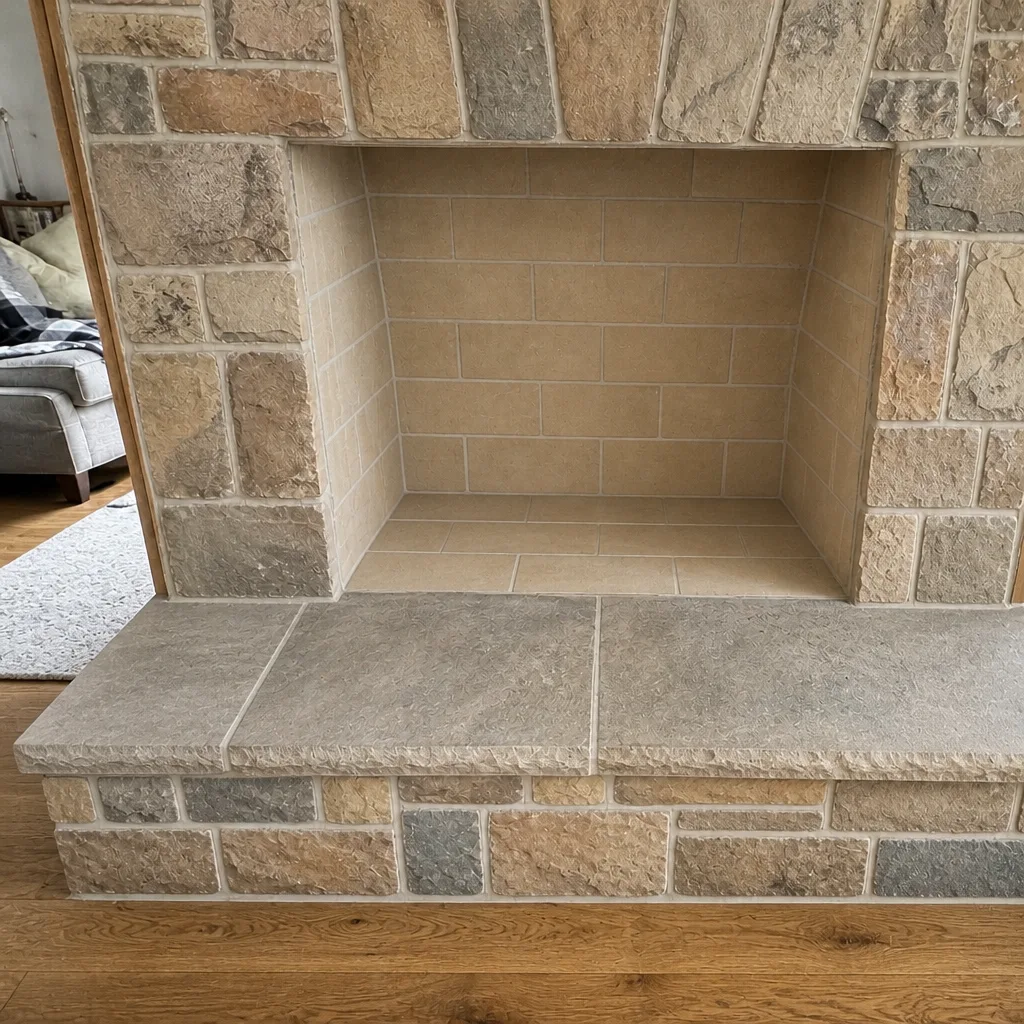
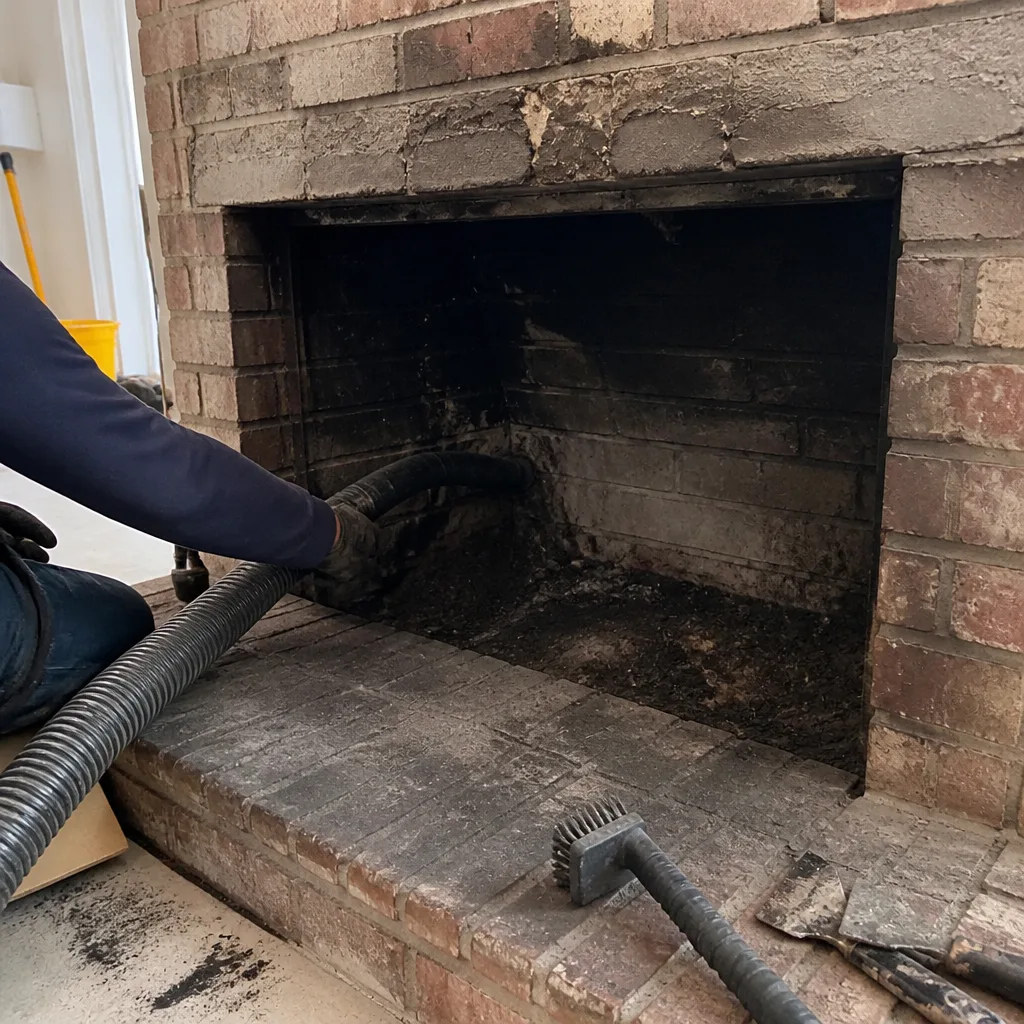
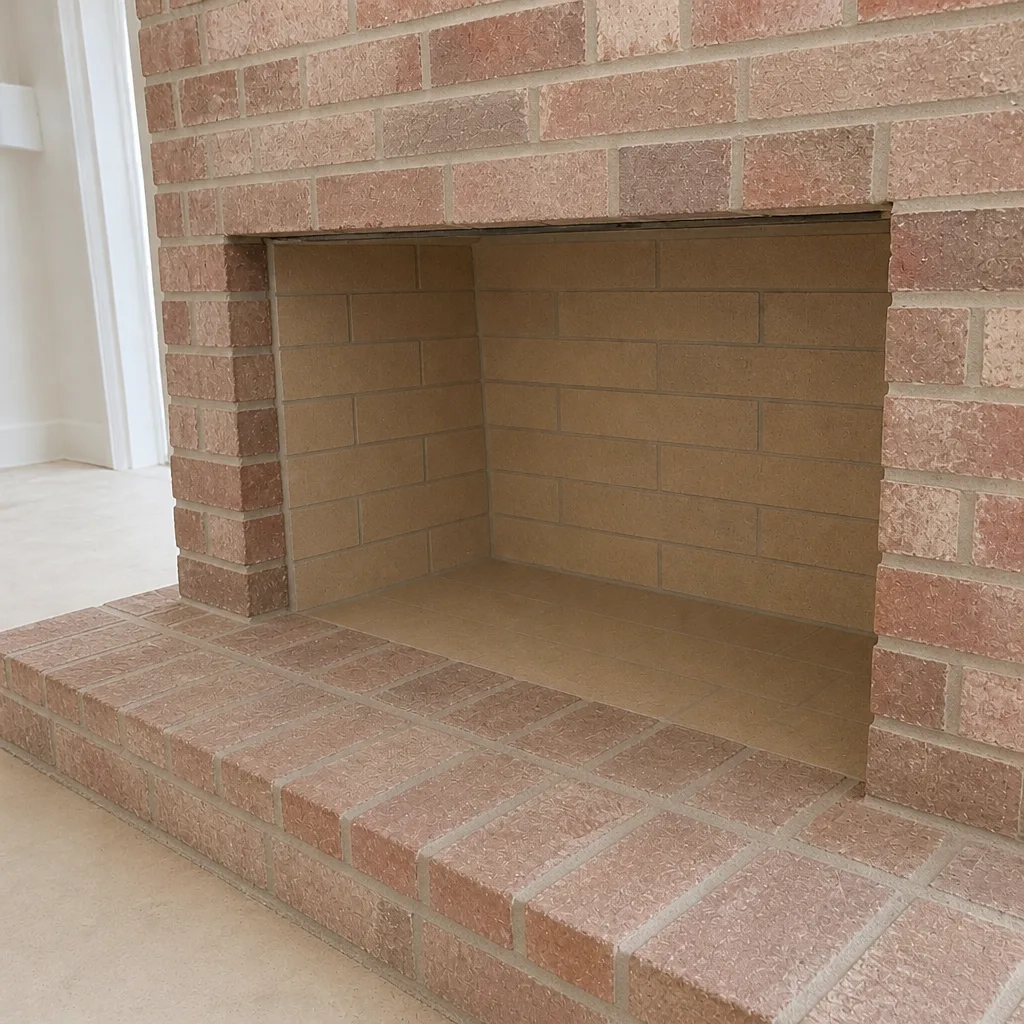
See the difference
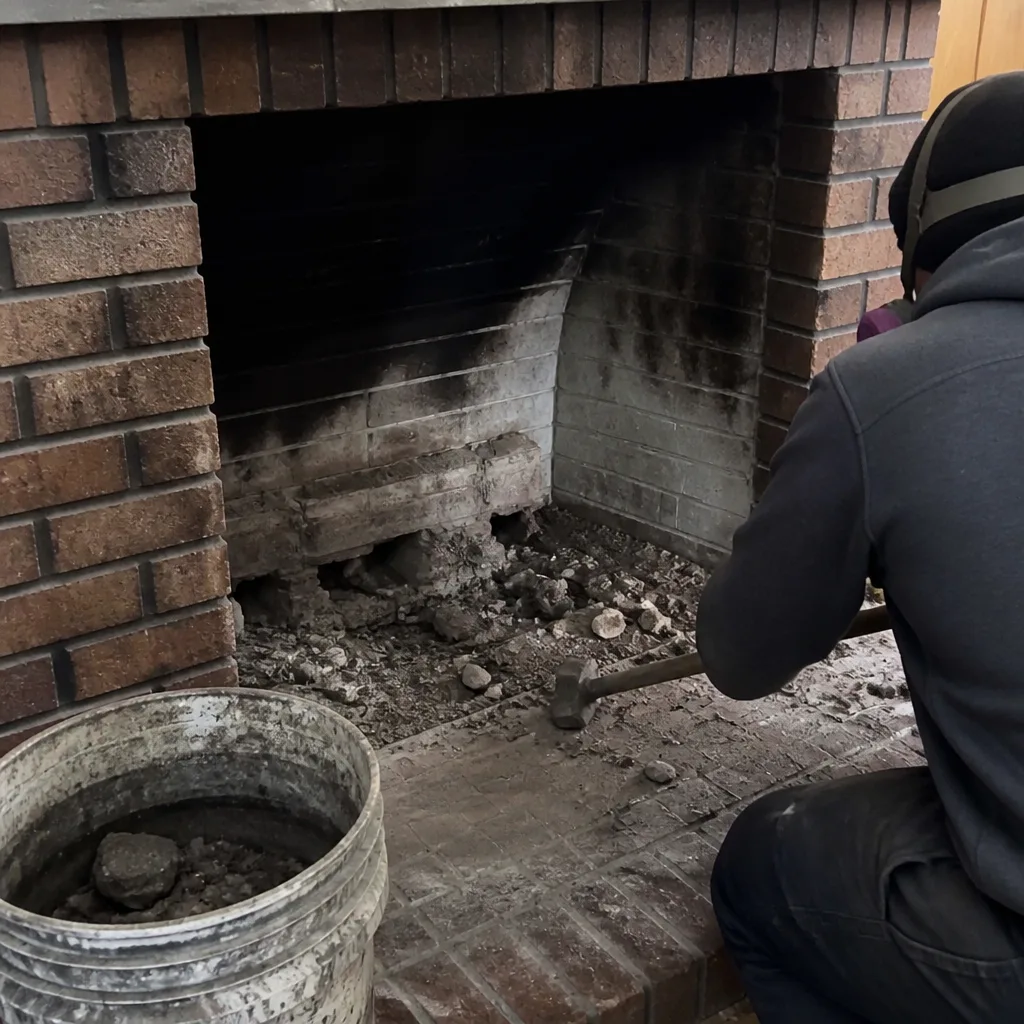 Before
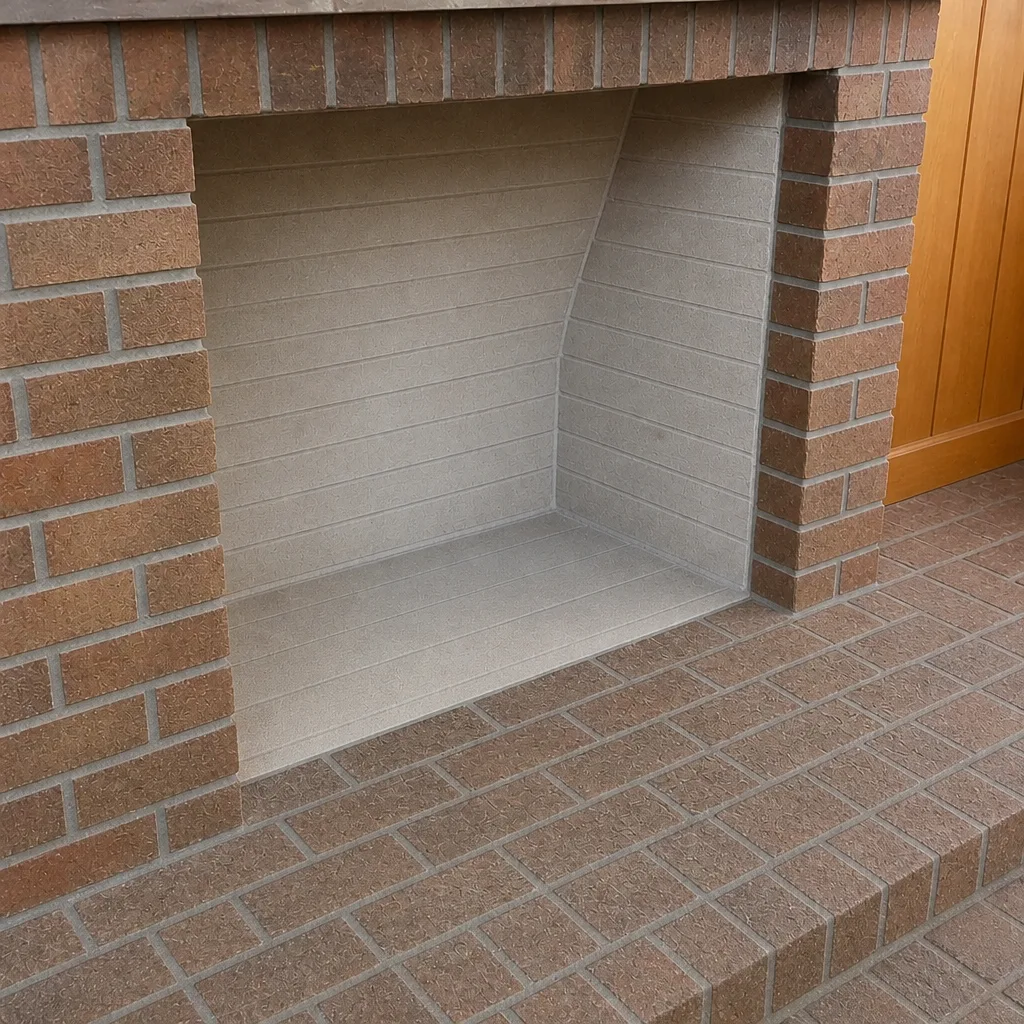 After
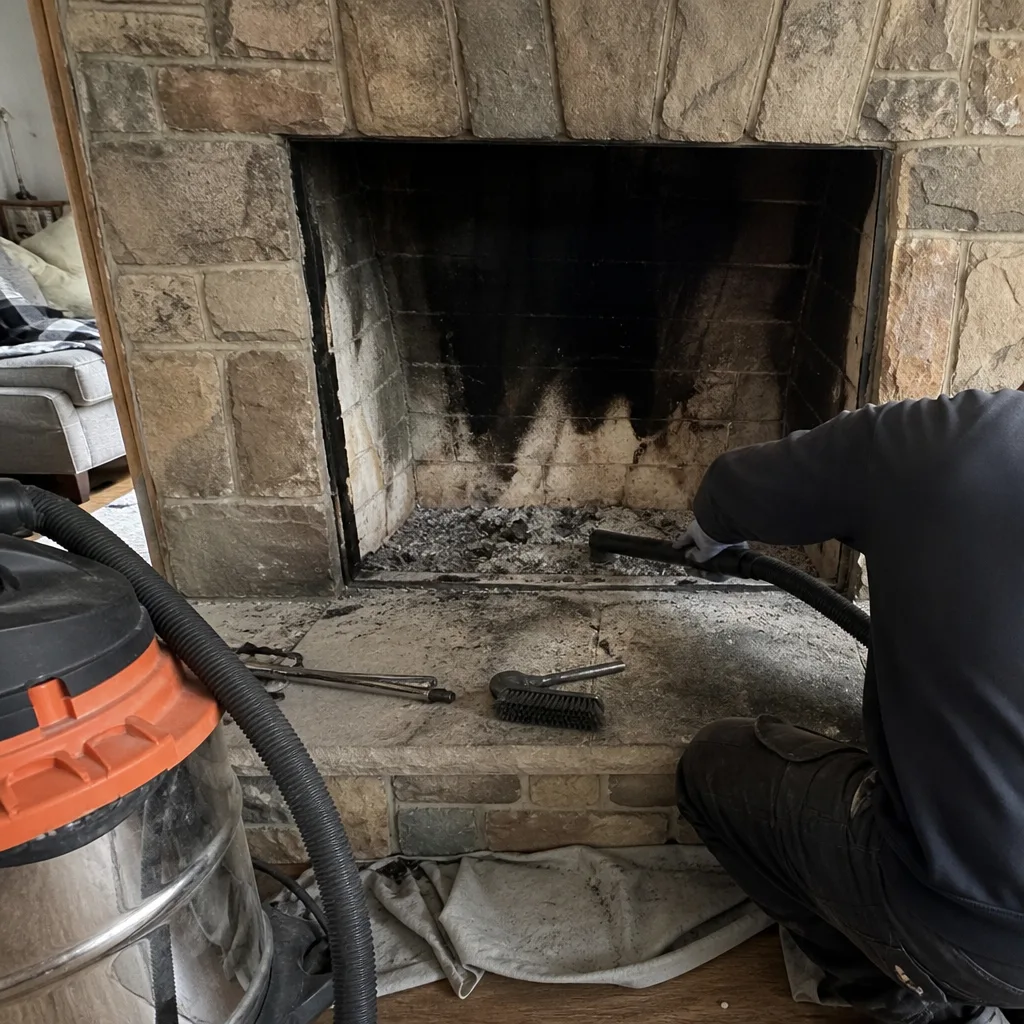 Before
 After
 Before
 After
When to Call a Professional
Call a professional before the next fire if you’ve had a chimney fire, if smoke is backing into the room, if you just bought a Federal Way home with no chimney history, if you’ve changed appliances, or if you’re seeing glazed creosote that a standard brush can’t remove. High-tension systems like spring-loaded dampers and structural repairs to masonry and crowns should always be handled by a trained professional, since the risk of injury and further damage is real. If you’re not sure whether a problem can wait, get the camera inspection and find out for certain rather than guessing. Federal Way Chimney Sweep Pros offers free estimates in Federal Way – call (844) 949-4711. We answer 24/7, and fast dispatch runs from 7am to 7pm, Sunday through Friday.
Frequently Asked Questions
Most wood-burning chimneys in Federal Way need cleaning once a year or after about a cord of firewood, whichever comes first. The wet local climate and the older undersized flues common to 1960s – 1980s construction can push that schedule faster. If you burn often, schedule a camera inspection and let the findings set the actual timeline. Call (844) 949-4711 for an exact quote – estimates are free.
A typical chimney cleaning in Federal Way is priced per job on a written estimate after we see the system, so we can’t quote a number before we know what we’re working with. The estimate is free, and the written estimate sets the final price. A Level 2 camera inspection costs more than a routine sweep because it’s a different scope of work. Call (844) 949-4711 for an exact quote – estimates are free.
A Level 1 inspection covers the accessible parts of the chimney by eye, and a Level 2 adds a video camera inspection of the flue interior. Level 2 is required after a chimney fire, when you change appliances, and when you buy a home. For Federal Way buyers and anyone who’s burned without a recent inspection, Level 2 is the one to ask for.
Not usually, but the answer has to come from camera evidence, not from a sales recommendation. If the camera shows cracked or deteriorated liner material, a HeatShield liner resurfacing can often restore it without a full replacement. If the flue is simply undersized for the appliance, a DuraFlex flexible liner system can resize it to meet national building code requirements. The right call depends on what the camera shows, and we don’t recommend liner work without photos you can look at yourself.
Creosote builds up in layers, and glazed third-degree creosote is highly combustible – a chimney fire is the real risk, along with carbon monoxide if the flue or venting is compromised. The buildup also restricts draft, which makes each subsequent fire burn dirtier. Nothing dramatic happens most days, and that’s what makes the problem easy to ignore until it isn’t. Call (844) 949-4711 for an exact quote – estimates are free.
Yes. We handle the sweep, inspection, cap and crown work, and repair under one roof. That matters because the inspection findings drive the repair, and having one company on both sides means there’s no finger-pointing between a sweeper and a repair crew. Call (844) 949-4711 to book the inspection; we answer 24/7 and fast dispatch runs from 7am to 7pm, Sunday through Friday.
The Bottom Line
A proper chimney cleaning in Federal Way is a technical job, not a routine surface brush. The wet climate accelerates glazed creosote, moss, and condensation damage; older housing stock often has undersized flues that compound the problem; and the only way to know which applies to your home is a camera inspection that you can see the results of. A sweep plus a Level 2 inspection is the standard most Federal Way homes actually need, and it’s the standard a company should be able to deliver without a sales pitch attached. If the inspection turns up liner or crown work, the right materials – HeatShield, DuraFlex, Gelco, Famco, Copperfield – make the difference between a fix that lasts and a patch that doesn’t. Call (844) 949-4711 for a free estimate. We answer 24/7, fast dispatch from 7am to 7pm, Sunday through Friday.
Written by the team at Federal Way Chimney Sweep Pros.